







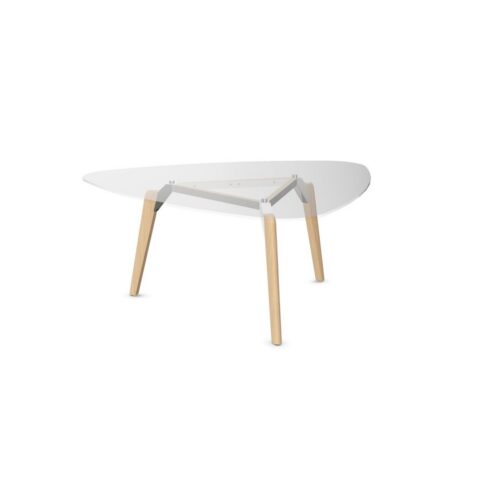


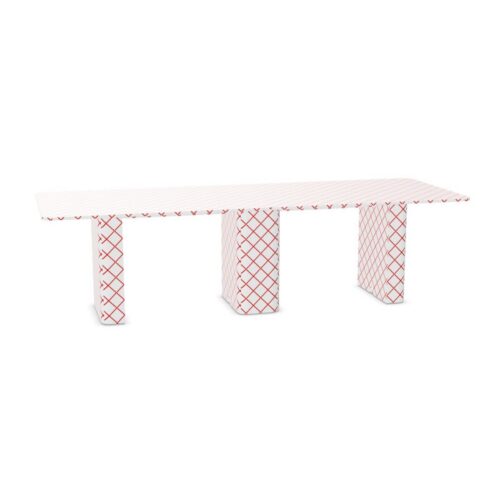


Positioning Conference Tables With Oval Tops and Red Surfaces
Start with the main walking route through the room. Position the oval so that people arriving can reach their chairs without passing through another participant's working area. The curved ends change the outline of that route, but they do not remove the need for clear space behind occupied chairs. Consider how the entrance approaches the table: a doorway facing an end creates a different arrival sequence from a doorway beside its length. Keep frequently used storage accessible without requiring someone to leave their seat whenever a cupboard is opened.
Give Red a Defined Role
When planning oval conference tables with red surfaces, decide whether red will be the room's main accent or part of an established color scheme. If red already appears on a nearby wall, consider whether repeating it across the meeting surface creates the balance you want. Chairs, flooring and wall finishes can provide visual separation between the tabletop and its surroundings. Avoid relying on color names alone when comparing combinations; the appearance of red alongside existing finishes matters more than an isolated description. Consider the room from both the doorway and the seated position.
Arrange Seats for Discussion and Presentation
An oval perimeter offers several possible seating positions, but the meeting format should determine which ones are useful. For conversations around the table, check that chairs follow the outline without crowding neighboring places. For screen presentations, consider where participants must turn to see the display. Seats around a curved end may need a different orientation from those along the sides. Leave a practical place for the presenter to stand without blocking the main route. If meetings alternate between discussion and presentation, assess both arrangements before settling on a permanent chair layout.
