



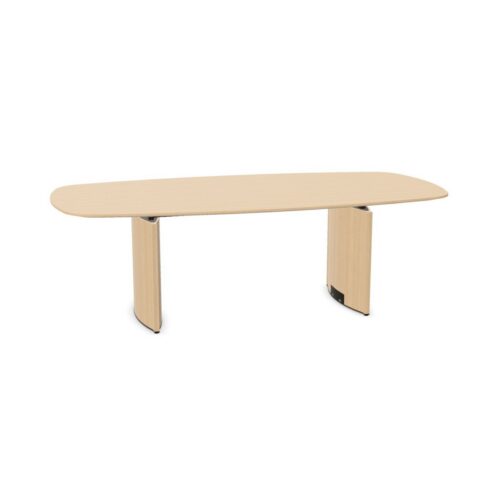


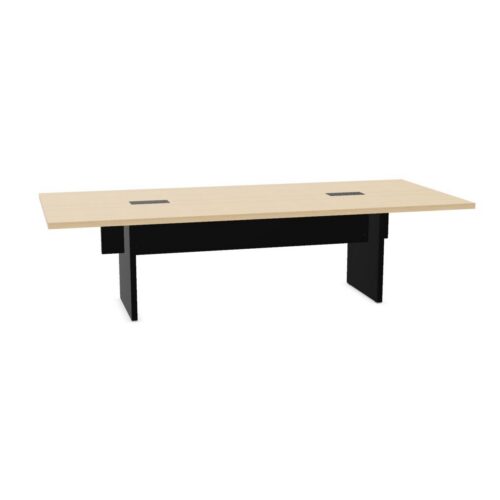

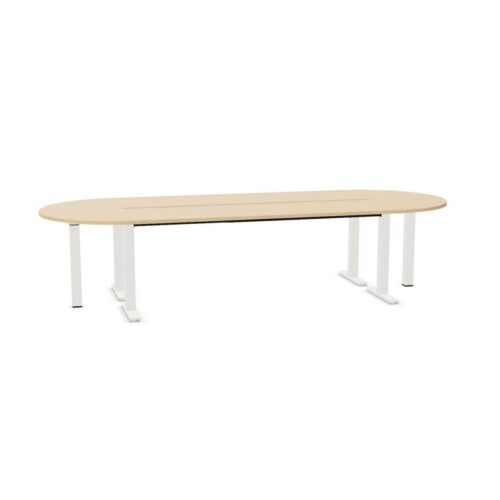


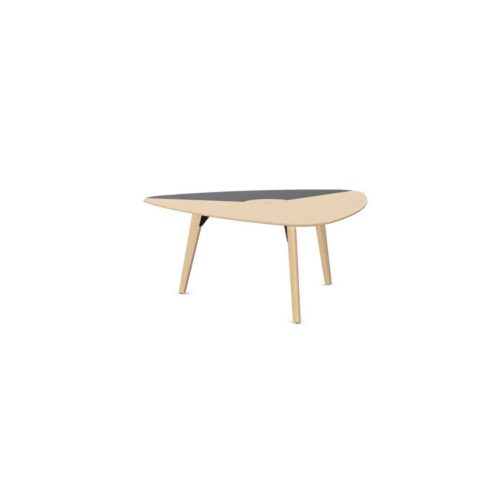

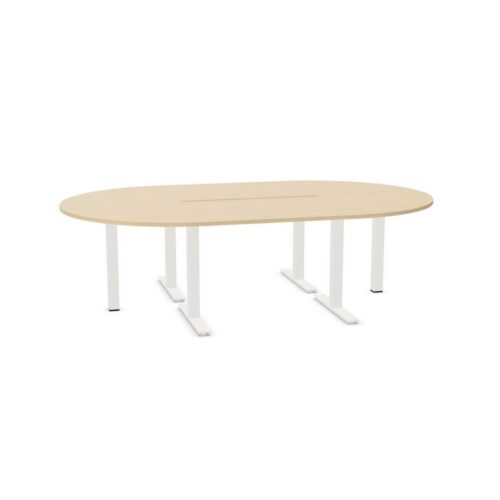


Planning conference tables with oval tops and brown surfaces
Begin with the room's main discussion pattern. If participants regularly review shared papers, decide where that work will sit before assigning chairs. Around an oval perimeter, end positions turn toward the curve and may relate differently to the central working area. Check those positions in practice instead of assuming every place offers the same access.
Brown oval conference tables also need assessment alongside nearby furniture. Compare the surface with existing colors and decide whether it should connect with them or stand apart. Keep this visual decision distinct from construction: brown alone does not identify the material, texture or finish of the top.
Relate brown to the room's existing palette
Start with elements that are unlikely to move, such as the floor and walls. Then consider storage and seating. Brown may be repeated elsewhere in the room, but close colors are not necessarily identical colors. View the actual surfaces together and judge whether their relationship appears deliberate from the entrance and from the meeting seats.
If the room contains several strong tones, decide which should have the greatest visual emphasis. The tabletop is seen alongside chairs and meeting materials, so evaluate that complete scene. Avoid treating the surface as an isolated swatch or assuming that brown will coordinate equally with every existing furniture finish.
