

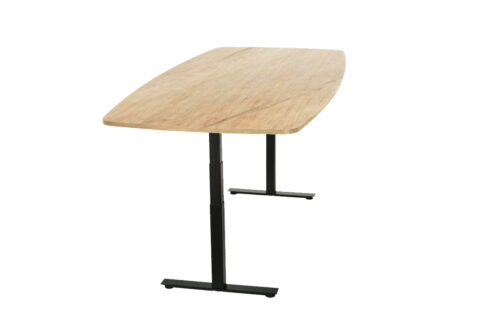
Semi-Oval Leaf Conference Tables Without Stacking

Non-stackable conference tables with semi-oval leaf tops combine a shaped meeting surface with a clear storage consideration: tables cannot be stacked when taken out of use. The tabletop outline should guide how participants gather, while the absence of stackability should guide plans for clearing the room. Consider both from the beginning, especially where the space serves activities beyond regular meetings.

Use the semi-oval leaf shape as a reason to assess orientation carefully. Compare how chairs relate to its curved and straighter portions, the direction of discussion and any shared display. Then identify where the table belongs when the room changes. The shape name does not establish an extending or folding mechanism, and non-stackability does not determine mobility or height adjustment. A useful plan stays focused on the actual outline, comfortable working positions and separate accommodation whenever the table is moved out of the meeting arrangement.

€27.04 p/m

Orienting Non-Stackable Conference Tables With Semi-Oval Leaf Tops

Consider the tabletop in relation to the main activity before arranging chairs. The semi-oval outline makes orientation worth testing, particularly when a meeting combines face-to-face discussion with attention to a presentation point. Check how people sit along different portions of the edge and where their notes or laptops will go. A visually balanced arrangement may still leave someone facing away from shared material. Assess the table from the intended seats, then review the approach to each place. The shape should support the meeting rather than become the sole reason for choosing a particular room arrangement.

Distinguish Working Positions Around the Outline

Do not assume that a chair fits equally well everywhere around the top. Review the relationship between the curved edge, the seated user and nearby chairs. People should be able to approach the surface, refer to documents and turn toward colleagues without repeatedly shifting their seat. If chairs have arms, check their interaction with the actual edge and underside. Non-stackable conference tables with semi-oval leaf tops need this seating review independently of their storage characteristics. The absence of stacking says nothing about which chair will suit the table, so assess the complete working arrangement directly.

Prepare a Storage Plan Before Clearing the Room

Identify a separate destination for the table whenever an activity requires it to be taken out of use. Check that the location leaves surrounding doors, storage and walkways accessible. Follow the table's handling instructions and assess the route before expecting room users to make regular changes. A semi-oval leaf outline does not establish that the table folds or becomes more compact for storage. Since this combination is non-stackable, the plan should accommodate the table individually. If no suitable destination exists, review whether the proposed room change can work around the table remaining in place.

Keep Circulation Useful During Meetings and Resets

Review movement around the tabletop with chairs in active positions, paying attention to where the changing outline approaches neighboring furniture. Then consider the room during preparation, when chairs or equipment may temporarily occupy different places. Keep the route to the exit available throughout the reset rather than only in the finished arrangement. Non-stackable conference tables with semi-oval leaf tops require a practical connection between their meeting position and any separate storage location. A workable plan accounts for both, so occasional rearrangement does not depend on leaving furniture in shared circulation areas while another part of the room is prepared.

Frequently Asked Questions

Does a semi-oval leaf top imply an extension?

No extension or folding feature is established by this combination. Treat semi-oval leaf as the tabletop shape and confirm any separate operating features before planning a room routine that depends on changing the table itself.

How should the curved portion face the room?

Test it against the intended chair positions, conversation pattern and presentation point. Check access around the actual outline as well, since an orientation that supports discussion still needs practical routes to seats and shared room facilities.

What changes when stacking is unavailable?

Non-stackable conference tables with semi-oval leaf tops need individual accommodation when removed from the meeting area. Plan the destination, access route and handling routine before treating a fully cleared room as a regular option.

Explore related selections