

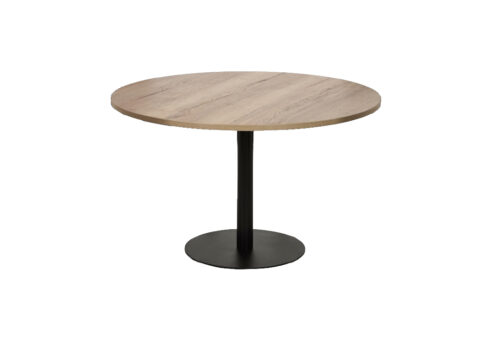
Round Leaf Conference Tables Without Stackability

Non-stackable conference tables with round leaf tops pair a rounded meeting outline with the need for individual accommodation when tables are taken out of use. The round shape provides a clear starting point for arranging a discussion around the tabletop. The absence of stackability adds a separate planning question: where will each table go if the room needs a different arrangement?

Assess the meeting setup and the reset routine together. Place chairs according to useful working positions around the round top, then check access with people seated and chairs pulled back. If presentations are common, review the direction each participant will need to face. A round outline does not make every seat equally useful for every activity. Likewise, non-stackability does not establish whether the table moves, folds or changes height. Plan from the stated shape and storage limitation, confirming other characteristics separately when the room routine requires them.

€7.97 p/m

Arranging Non-Stackable Conference Tables With Round Leaf Tops

Begin with the discussion the table needs to support. Place chairs around the round outline so participants can face one another while retaining a useful area for notes or other meeting materials. Avoid treating equal visual spacing as proof that every working position is suitable. Check how chairs relate to neighboring furniture and where people approach the table. A round top does not establish a particular seating capacity, so assess the actual arrangement through the planned activity. Since stacking is unavailable, also consider whether this layout can remain practical through the room's usual changes.

Account for Presentations Around a Round Top

A discussion arrangement and a presentation arrangement may place different demands on the same chairs. When a shared display is used, assess each participant's viewing direction alongside their relationship to the tabletop. Someone facing toward the center may need to turn to see material elsewhere in the room. Consider whether adjusting chair orientation is practical without obstructing a neighbor or a route. Non-stackable conference tables with round leaf tops should be assessed for these real meeting patterns, rather than assuming that a round shape removes the need to plan a clear point of attention.

Leave Working Space Around the Full Perimeter

Follow the tabletop's curve when reviewing access. Check the places where occupied chairs and nearby walls or cabinets come closest together, then consider what happens when someone stands. Keep routes to shared facilities usable without making another person's working area the usual passage. The round outline should be assessed as part of the whole furniture arrangement. If the room contains separate tables, review the circulation between them with chairs in use. An empty gap between tabletops can become much less useful once people settle into their working positions and place belongings nearby.

Give Room Changes a Realistic Storage Routine

When a table must leave the meeting area, plan a separate destination that remains accessible. Confirm the handling requirements and review the route, including doors and nearby furniture, before making regular relocation part of the room schedule. Non-stackable conference tables with round leaf tops cannot be accommodated by stacking them together. The round leaf name also does not establish a folding or extending feature. If the room regularly needs an open area, evaluate how the individual storage arrangement will work in practice. A clear destination and preparation routine make the planned change concrete rather than leaving storage to be improvised afterward.

Frequently Asked Questions

Does the round shape make every seat equivalent?

No. The presentation point, neighboring furniture and access routes can make positions different in practice. Check each intended seat for conversation, use of meeting materials and movement rather than relying on the tabletop outline alone.

Can a non-stackable table still be rearranged?

Stackability does not determine mobility. Confirm the handling requirements separately, then assess the route and intended destination. Any rearrangement should account for chairs and equipment as well as the table's position within the room.

What is needed when the meeting area must be cleared?

Non-stackable conference tables with round leaf tops need separate accommodation outside the working arrangement. Identify that location in advance and keep exits, storage access and shared walkways usable during both relocation and the finished room setup.

Explore related selections