



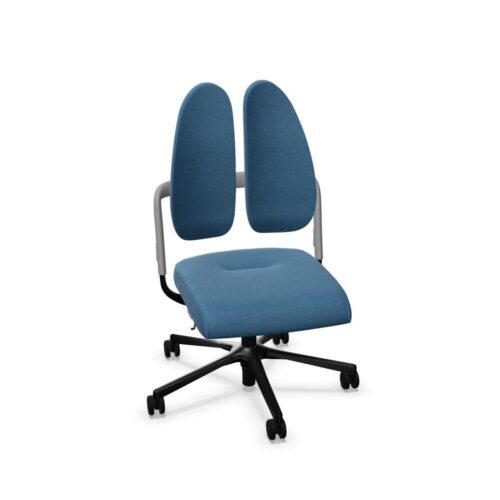

Inspect the Surfaces That Meet the User
Identify the plastic areas and examine their shape, edges and relationship with surrounding components. Confirm the seat and backrest construction separately rather than assuming the material description applies to every part. During a seated trial, note where the user makes contact and how that contact changes with ordinary movements.
Plastic office chairs with 4D armrests need the same attention to dimensions as other seating. Record seat width, depth and the relevant support measurements. Use the observations to identify further questions about construction, keeping any conclusion about suitability connected to the actual chair and workstation being assessed by the office team.
Test Adjustment as a Working Sequence
Start with the user approaching the desk, then move through their normal tasks and departure from the seat. Establish which movements the 4D armrests provide and how the controls operate. Ask the person to find useful support positions while keeping their working equipment in its normal arrangement.
Plastic office chairs with 4D armrests should be checked for clearance at each relevant setting. Observe the desktop edge, underside supports and nearby furniture. A setting available away from the desk may have limited use beside it, so record both the adjustment range and the positions that work within the actual room.
