

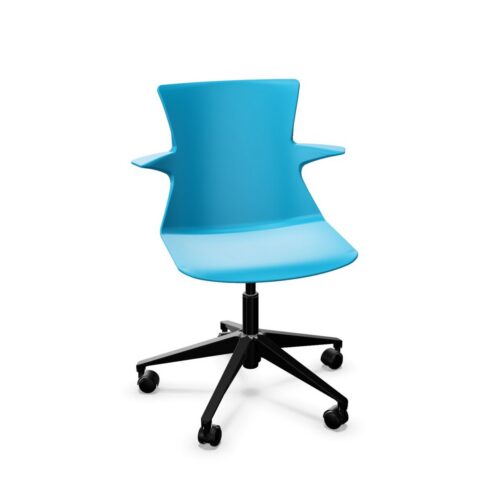
Plastic Office Chairs for Everyday Settings

Plastic office chairs deserve a comparison that starts with their actual construction. Establish which parts are plastic, where the user makes contact and whether the seat or back includes any additional covering. Plastic as a material description does not confirm flexibility, weight, cushioning or resistance to a particular cleaning product. Those characteristics need their own evidence before they become part of an office seating specification.

Think first about the activities the chairs will support. A discussion space, a training area and a desk position place different demands on access, movement and the relationship between chair and table. Review the proposed plastic seating in each relevant arrangement, including how people sit down, move their feet and leave the work surface. For shared rooms, add handling and cleaning to the comparison. The aim is a clear account of how the complete chair works in the space, with material choice considered alongside dimensions and user fit.

6 models
From €6.87 p/m
2 models
From €6.87 p/m
4 models
From €7.26 p/m
3 models
From €8.88 p/m
3 models
From €7.48 p/m
3 models
From €1.78 p/m
24 models
From €4.49 p/m
28 models
From €2.34 p/m
7 models
From €2.64 p/m
9 models
From €4.49 p/m
11 models
From €3.40 p/m
2 models
From €5.56 p/m
4 models
From €5.25 p/m
2 models
From €10.96 p/m
7 models
From €2.97 p/m
6 models
From €6.52 p/m
3 models
From €4.35 p/m
4 models
From €6.19 p/m

Begin With the Shape People Sit Against

Inspect the seat profile, front edge and back contact area. Establish whether the plastic forms an exposed sitting surface or sits beneath another material. The answer affects what users are evaluating during a trial and which surfaces need their own maintenance instructions. Record these distinctions before comparing chairs.

Invite users to try the proposed seating while carrying out a representative activity. Ask about contact at the thighs, the position of the back and the ease of changing posture. If the seat or back moves under load, request an explanation of the intended behaviour rather than assuming that visible movement is a specified support feature.

Match Maintenance Instructions to Real Tasks

Do not treat all plastic surfaces as having the same care requirements. Obtain the permitted cleaning methods for the complete chair, including any other exposed materials. Check how staff should deal with routine marks and spills, and whether any restrictions apply to the products already used in the building.

Pay attention to the places that need access during cleaning. Inspect joints, edges and transitions between materials without assuming that a simple appearance guarantees a simple process. Ask the responsible team to review the instructions and the physical chair together. This helps reveal practical questions that a material description or photograph cannot settle on its own.

Plan Movement Around the Room

Where chairs are moved regularly, verify the handling method, actual weight and any movement or storage features. Plastic construction alone does not establish that a chair is light, stackable or suitable for repeated rearrangement. Each of those requirements belongs in the brief only when confirmed for the chair being assessed.

Recreate a typical room change during the evaluation. Check the route between tables, the available storage space and the effort required from the people responsible. Include floor contact and any restrictions on moving the chair while occupied. A useful assessment covers the transition between activities as well as the final arrangement once everybody is seated.

Specify Performance Beyond the Material Name

List the requirements that matter to the workplace independently of the plastic description. These may include dimensions, stated user limits, relevant test evidence or compatibility with the intended environment. Request documentation for each requirement. Avoid treating a surface texture, shell thickness or particular visual style as proof of performance.

Keep the final comparison readable by separating confirmed characteristics from matters still awaiting an answer. Where durability or repair is important, ask about the relevant components and the documented procedure for damage. This creates a more useful basis for a decision than a general claim that plastic seating should withstand a particular pattern of office use.

Plastic Office Chair Questions

Are plastic office chairs always easy to clean?

Cleaning depends on the specific surfaces, construction and approved methods. Check the instructions for the entire chair, especially where plastic meets other materials. Ask the cleaning team to assess access around edges and joints. Do not assume compatibility with a chemical or cleaning machine unless that method is expressly supported for the chair concerned.

Does plastic seating provide flexibility?

Some designs may allow movement, but the material description does not confirm how a particular chair behaves. Assess the complete seat and back, and ask which movements are intentional. Users should try the chair at the relevant table so that any movement can be considered alongside support, contact pressure and the activity being performed.

What should shared rooms check first?

Start with the people, activities and room arrangement. Confirm suitable dimensions and assess how the chairs are handled between uses. Then review cleaning, storage and any stated restrictions. If stacking or frequent movement is required, verify those features directly rather than assuming they follow from the presence of plastic in the chair’s construction.

Explore related selections