

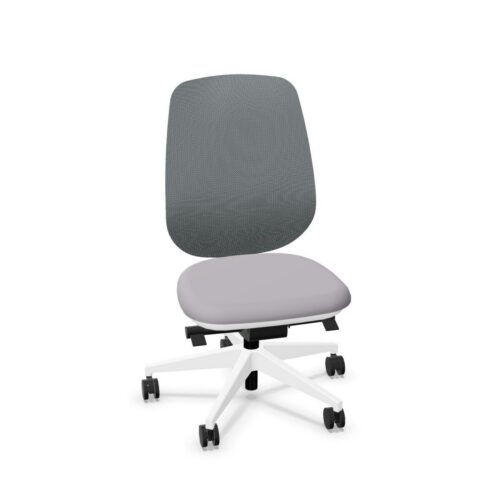
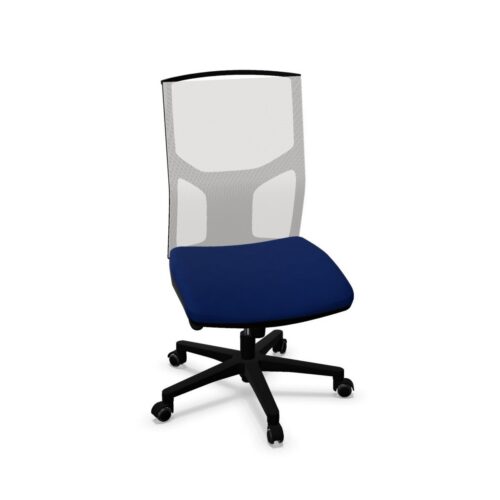
Armless Office Chairs With Adjustable Seat Depth

Armless office chairs with adjustable seat depth bring together an unobstructed space beside the seat and a front-to-back setting that users can change. Their absence of armrests removes chair-mounted forearm support from the arrangement, so the desk and task positions deserve attention alongside leg fit. For an office manager, the assessment has two connected aims: establish a useful seat-depth setting and check how the employee works with their arms while approaching and using the workstation during their normal tasks.

This combination can be assessed through activities involving different hand positions, such as typing, using a pointing device and handling documents. Office chairs without arms still need a careful clearance check; the absence of armrests alone does not establish how the whole chair fits beneath a desk. Have users try the adjustable depth while remaining in contact with the backrest. Then repeat their tasks and note how they position their forearms, reach equipment and move between activities during an ordinary working session.

6 models
From €10.17 p/m
4 models
From €6.13 p/m
7 models
From €7.54 p/m
4 models
From €7.99 p/m
5 models
From €8.41 p/m
2 models
From €8.08 p/m
5 models
From €8.28 p/m
5 models
From €17.02 p/m
2 models
From €15.27 p/m
9 models
From €10.37 p/m
3 models
Price on request
8 models
Price on request
2 models
Price on request
3 models
Price on request
9 models
From €4.49 p/m
4 models
From €7.32 p/m
4 models
From €8.24 p/m
10 models
From €5.35 p/m

Begin With The Work Surface

Without chair-mounted armrests, the relationship between the user and the desk becomes a central part of the assessment. Armless office chairs with adjustable seat depth should be tested with work equipment in its usual position. Observe where the forearms rest, how the hands reach the keyboard and whether the desk edge creates uncomfortable contact. Do not assume that removing arms automatically establishes an appropriate working position. The work surface still needs to suit the person and task. Record any changes being considered and test them with the same seated routine before deciding that the arrangement works.

Use Depth Adjustment To Assess Thigh Support

The seat-depth control changes the front-to-back seating dimension, so assess it against the user's legs and backrest contact. Ask the person to find a position that supports the thighs without uncomfortable pressure behind the knees. Then have them resume an ordinary task and check that they continue to use the backrest. When comparing office chairs, examine the usable adjustment range and the clarity of the control. These details are not established simply by knowing that depth adjustment is present. A short trial across several positions can show whether the available travel is useful to that employee.

Test Reaching And Changes Of Activity

An assessment should include more than a single typing position. With armless office chairs with adjustable seat depth, ask the user to handle documents, use their pointing device and reach other frequently needed items. The space beside the seat is free of armrests, but the person's movements still depend on the surrounding furniture and equipment. Observe whether they repeatedly leave the backrest or stretch across the desk. Investigate those movements in relation to task layout and seated fit. Keep the depth setting focused on supporting the person rather than using it to compensate for distant work items.

Explain Setup At Shared Workstations

Shared use calls for guidance that connects the seat adjustment with the complete desk arrangement. Show staff how to identify and operate the depth control, then explain the check involving the backrest and seat edge. Office chairs with adjustable depth may need a different setting for each user, while the absence of armrests remains unchanged. Include a reminder to review hand and forearm positions after adjusting the seat. Keep a record of unresolved fit concerns and invite users to report them. Other chair functions need independent confirmation before they become part of the instructions given to employees.

Questions About Armless Adjustable Seating

Does an armless chair fit beneath every desk?

No such fit is established. Armless office chairs with adjustable seat depth have no armrests, but the seat and other parts still occupy space. Test the complete chair at the intended desk with the person in their working position.

Where should the employee rest their forearms?

Assess this through the task and workstation arrangement. There is no chair-mounted armrest support in this combination. Observe the user's natural hand positions and any contact with the work surface rather than assuming the desk automatically provides suitable support.

Does changing depth alter the need for a desk trial?

The desk trial remains necessary because seat fit and equipment access interact. After adjusting depth, have the user repeat their main tasks. Check backrest contact, the seat edge and arm positioning together before recording the arrangement as suitable.

Explore related selections