

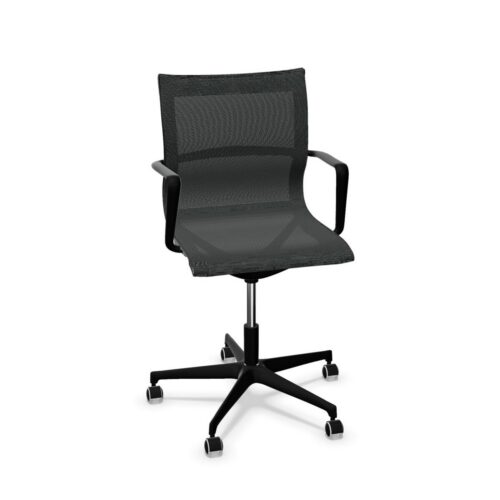
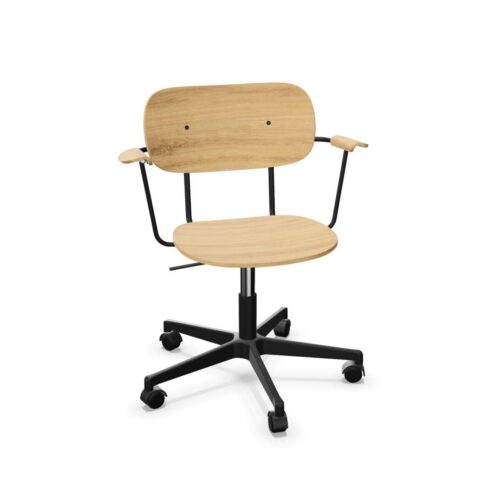
Fixed-Depth Office Chairs With Armrests

Fixed-depth office chairs with armrests make the underlying seat dimensions an early decision point for workplace seating. The seat cannot be lengthened or shortened through a depth adjustment, so its fit needs to be assessed directly. Armrests provide another point of interaction with the user and desk, but their presence does not establish whether their position can change. An office manager should therefore separate the seat-fit assessment from questions about armrest movement, dimensions and access to the work surface.

An assigned workstation offers a useful setting for this comparison because one employee can test the complete arrangement through familiar tasks. Examine how the person sits against the backrest, where the seat ends beneath the thighs and how they approach the desk. Comparing office chairs on these practical relationships makes the decision easier to explain. It also helps identify a mismatch that a quick seated impression might overlook, particularly if the person adjusts their posture to work around an unsuitable seat dimension.

6 models
From €10.17 p/m
4 models
From €6.13 p/m
7 models
From €7.54 p/m
4 models
From €17.65 p/m
2 models
From €35.28 p/m
4 models
From €28.11 p/m
€11.40 p/m
3 models
From €27.57 p/m
6 models
From €23.37 p/m
4 models
From €7.99 p/m
5 models
From €8.41 p/m
2 models
From €11.25 p/m
3 models
From €23.12 p/m
5 models
From €23.04 p/m
3 models
From €9.20 p/m
5 models
From €8.28 p/m
5 models
From €17.49 p/m
4 models
From €7.79 p/m
19 models
From €2.38 p/m
2 models
From €13.64 p/m

Use The Assigned User As The Reference

For an individual workstation, begin with the employee's normal seated position and daily activities. Fixed-depth office chairs with armrests should be tested by the person expected to use them regularly. Ask them to work at the desk rather than judge the chair in an open area. Watch whether they remain in contact with the backrest or repeatedly move towards the seat edge. Their explanation matters alongside observation: ask about thigh support, contact behind the knees and ease of reaching equipment. Record these points before discussing armrest details, so a seat-depth mismatch remains clearly identified.

Compare Dimensions Through Seated Experience

Seat measurements can support a comparison, but their significance comes from how the person uses the seat. Check the usable front-to-back space and observe how much of it the employee occupies while using the backrest. Do not assume a deeper seat is preferable or that a shorter one will suit every smaller user. Office chairs with no depth adjustment require the existing dimension to work for the individual. Include a period of ordinary work, because someone may initially hold a position that they do not maintain during typing, reading or changes between desk activities.

Investigate The Armrests Without Assumptions

The armrests deserve their own practical inspection. With fixed-depth office chairs with armrests, the absence of seat-depth adjustment says nothing about whether the arms themselves move. Establish their position, shape and any controls before deciding how they interact with the workstation. Check the user's forearms during their main tasks, then observe whether the armrests contact the desk as the chair approaches it. If an obstruction appears, investigate the actual adjustment options. Do not rely on moving the person forwards on the seat as a lasting answer to a problem elsewhere in the arrangement.

Plan For Changes In Desk Assignment

A seating arrangement assessed for one employee needs another look when a different person takes over. The fixed seat depth remains the same even when the desk equipment and user change. Keep a concise record of the original fit assessment, armrest observations and relevant dimensions so that later comparisons have a useful starting point. Office chairs should be reassessed against the incoming user's proportions and tasks rather than automatically retained through a desk move. Also verify any other functions needed for the role, since this combination establishes neither their presence nor their adjustment range.

Practical Questions Before Desk Assignment

Can seat depth be changed later?

Seat-depth adjustment is absent in this selection. When assessing fixed-depth office chairs with armrests, judge the existing seat dimension as it is. Do not base the assessment on an expectation that another control will shorten or extend it.

Does having armrests mean they are fixed?

No particular armrest movement is established by their presence alone. Inspect the available controls and physical positions directly. Keep that finding separate from the confirmed absence of seat-depth adjustment, because the two features describe different parts of the chair.

What if the user keeps sitting forwards?

Ask why and examine the whole workstation. Seat depth, armrest interference and equipment placement all deserve checking. Repeated forward movement is a reason to investigate fit; it does not by itself identify which part of the arrangement needs changing.

Explore related selections