

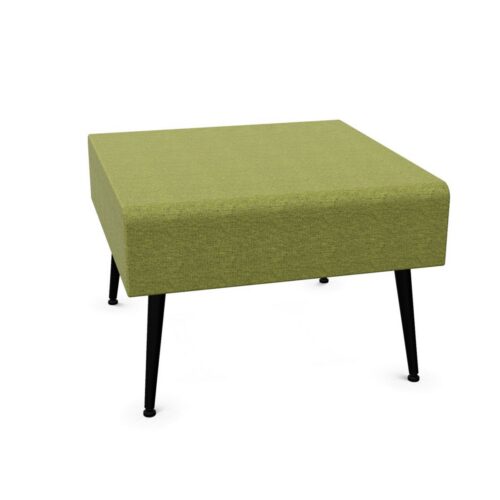
Armless Lounge Furniture With Black Bases

lounge furniture with no armrests and black base bases pairs open seating sides with a black lower outline. In a shared workplace lounge, this combination calls for careful decisions about the boundary between seating and movement. Without armrests, the sides have a different visual definition; beneath the seat, the black base adds a separate shape that must be understood within the arrangement. Assess the complete furniture rather than treating either attribute as a layout solution on its own.

Begin with the informal activities the room should accommodate and the routes connecting it to nearby spaces. Compare how people approach a place, join a conversation and leave an occupied group. When reviewing lounge furniture with no armrests and black base bases, give particular attention to exposed ends and neighboring pieces. A black appearance does not identify base material or an exact color code, while an armless profile does not establish furniture movement or reconfiguration.

3 models
From €10.66 p/m
2 models
From €37.93 p/m
€11.85 p/m
7 models
From €19.03 p/m

Using Lounge Furniture With No Armrests and Black Base Bases

An informal lounge still benefits from a clear seating plan. Identify which positions are intended for individual pauses and which belong to a conversation group. Armless sides can face different parts of the room, but their orientation should follow the intended use. Consider whether a person approaching a seat would cross another occupant's space or enter from the outer edge of the arrangement. Compare these routes with the furniture occupied. The absence of armrests leaves one kind of boundary out of the profile, making the relationship between neighboring pieces particularly relevant.

Give Every Open End a Purpose

An exposed seating end may face an approach, another piece of furniture or a passing route. Decide which relationship is intended before comparing appearances. With lounge furniture with no armrests and black base bases, assess the seat edge and the base below it as separate outlines. The base may have a different relationship to the surrounding space from the seating above, so confirm its actual form. Also consider where people are likely to place personal belongings. An open side should not be treated as an assumed extension of the usable seating or as an undefined storage area.

Assess Black Bases in Shared Views

Workplace lounges are often seen from neighboring areas as well as from within the seating group. Review the black bases from those shared viewpoints. Consider their relationship to the floor, the exposed seating ends and nearby furniture. The black description does not establish sheen, texture or underlying material, so compare those characteristics separately when they matter to the brief. Decide whether the bases should form a consistent visual detail across the group. A close view can reveal differences that are less evident from a distance, while a distant view may emphasize the overall lower silhouette.

Check the Layout Through Everyday Scenarios

Review lounge furniture with no armrests and black base bases through specific situations: someone joining a discussion, a colleague waiting briefly and people passing beside an occupied seat. Follow each route through the proposed arrangement. Check whether the purpose of the open sides remains clear in every situation and whether adjacent pieces create unintended obstacles. Record any assumptions about how the room will be used, particularly where the same area serves several activities. Compare furniture against those scenarios without assuming that an armless form means the pieces can be connected, moved or arranged in any particular way.

Frequently Asked Questions

Does armless seating imply a flexible furniture system?

No. The absence of armrests describes the seating sides. It does not establish connections, movement or any other system feature. Assess the actual furniture and its documented characteristics before planning a particular arrangement.

How can separate places be made clear without armrests?

Review the spacing, orientation and relationship between pieces. These decisions help express how the seating is intended to be used. Assess the arrangement with occupants rather than inferring personal boundaries from an unoccupied view alone.

What is the key check beside an informal circulation route?

For lounge furniture with no armrests and black base bases, check the exposed seating ends and full base outlines against the route. Consider both passing users and the approaches needed to reach an available place.

Explore related selections