



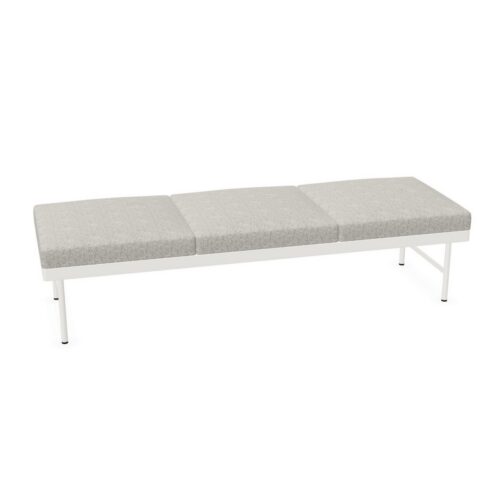
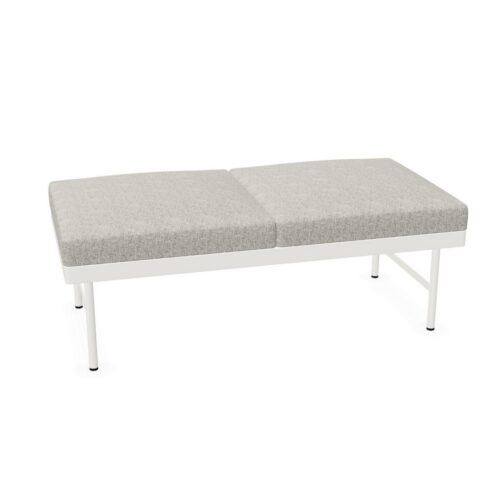
Spacing lounge furniture with no armrests and metal bases
The absence of armrests makes the gaps between seating positions particularly visible. Decide what those gaps need to achieve before arranging the group. They may separate individual places, provide an approach from the side, or distinguish the seating from a nearby route. Check the complete outline of each piece, including its metal base. Do not use the seat edge as the only reference for placement. Review the group with people seated, since an arrangement that appears open when empty can read differently once each place is in use and personal belongings are present.
Define the edges of a shared lounge
A seating group needs a clear relationship with the room around it. Identify which side faces the main route and which side belongs to the conversation area. Place the furniture so that passing movement has an understandable path around the group. Where a seat is approached from the side, assess that approach separately from general circulation. A side opening should serve a clear purpose in the plan. Avoid treating every gap as both access to a seat and a route through the room, particularly where people may be sitting for an extended discussion.
