

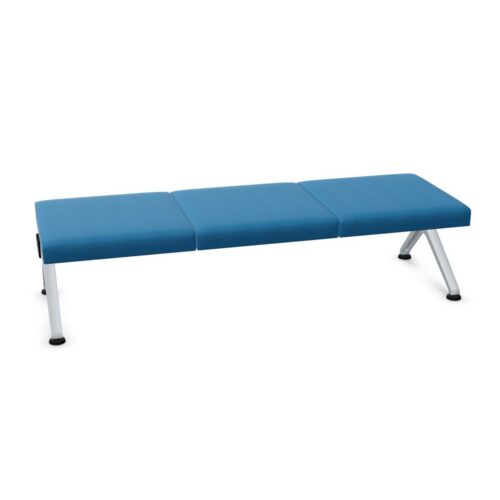
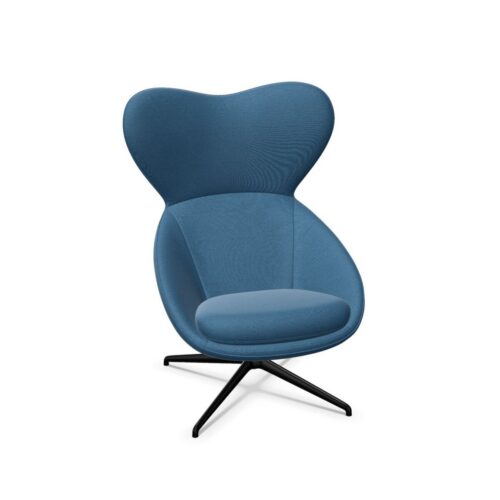
Lounge Furniture With No Armrests and Aluminum Bases

lounge furniture with no armrests and aluminum bases offers a specific starting point for breakout areas where seating sits between several workplace activities. The armless sides leave the seat edges visible, while the aluminum bases form another part of the arrangement below. Plan the relationship between these outlines before deciding how the group should meet nearby routes.

In a shared breakout setting, people may approach from different directions or join a conversation already underway. Review which openings are intended for reaching a seat and which belong to circulation around the group. Without armrests marking the sides, spacing and orientation take a prominent role in defining individual places. Assess the actual seat and base forms together, then consider how the arrangement reads from surrounding work areas, entrances, and the positions occupied by people within the lounge.

2 models
From €31.82 p/m
5 models
From €10.11 p/m
3 models
From €5.43 p/m
3 models
From €9.57 p/m
5 models
From €13.37 p/m
5 models
From €43.50 p/m
3 models
From €15.01 p/m
2 models
From €38.99 p/m
28 models
From €27.43 p/m
43 models
From €22.39 p/m
79 models
From €31.57 p/m
4 models
From €3.10 p/m
2 models
From €33.03 p/m
3 models
From €18.94 p/m
2 models
From €35.55 p/m
2 models
From €28.68 p/m
2 models
From €31.27 p/m

Organizing lounge furniture with no armrests and aluminum bases

Map the activities around the breakout area before positioning the seating. Mark the main routes between rooms and identify where people are likely to pause or turn toward a conversation. Arrange the group so that its boundary is understandable from these directions. The absence of armrests does not remove the need to define where seating ends and circulation begins. Use orientation and deliberate spacing to establish that relationship. Review each piece's full base outline alongside its seat, particularly where the group meets an active route or where someone may approach from the side.

Give each opening a clear purpose

An opening between armless seats can have several possible roles, but the plan should identify the intended one. It may provide an approach to a place or separate two parts of a conversation group. Assess whether that role remains clear when the seating is occupied. Avoid routing general movement through a gap that also serves the immediate area of a seated person. At the outer edge, check how someone joins the group without interrupting an existing conversation. Consider the approach from more than one direction, especially where the breakout area has several nearby entrances.

Compare the aluminum base and open seat outline

When reviewing lounge furniture with no armrests and aluminum bases, look at the relationship between the open sides above and the base below. Assess the actual form, finish, and visible extent of the aluminum base. Include any difference between the seat outline and base outline in the placement review. Then consider how the bases appear together from surrounding work areas. A repeated material can support a shared visual direction, but its particular expression depends on the individual pieces. Compare the complete group from several viewpoints before settling its position within the breakout space.

Check the boundary with adjacent activities

Seating near a meeting room, shared surface, or workplace entrance needs a clear relationship with that activity. Identify where people stand briefly and where seated conversation is expected to take place. Review whether those areas overlap in the proposed arrangement. Include bags and other personal belongings in the exercise, since their likely placement can change how an open seat edge is used. Keep the seating plan understandable when the group is partly occupied as well as full. Someone approaching should be able to identify a place without treating the entire arrangement as a passage.

Frequently asked questions

Do armless seats need a defined approach?

Yes. Establish how someone reaches each place, even when the seat has an open side. Assess the base outline, adjacent seating, and nearby movement together so that the intended approach remains clear when the breakout area is in use.

Can gaps between seats also serve passing traffic?

Review that relationship carefully in the occupied arrangement. A gap intended for seat access may be unsuitable as a general route through the group. Give each opening an explicit purpose before finalizing the seating plan.

What should be checked from neighboring work areas?

For lounge furniture with no armrests and aluminum bases, assess the group boundary, visible base forms, and separation between places. Check whether the seating arrangement and the route around it are understandable from the areas that face it.

Explore related selections