



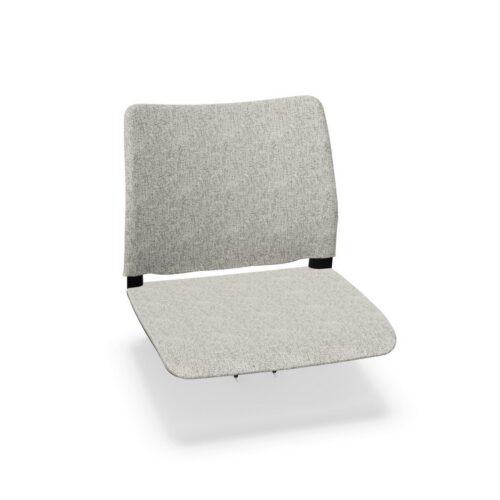

Planning lounge furniture with no armrests and white upholstery
Start by drawing the route through the room before positioning the seating. Open sides do not remove the need for a clear approach or a defined place to sit. In a reception area, orient the furniture so visitors can understand where to wait without stepping into the main passage. Where several seats form a group, leave a recognizable break between the group and adjacent circulation. Consider the view from the entrance as well as the view from a seated position. White armless seating should belong to an identifiable lounge area rather than appear scattered along a route.
Establish Definition Around White Seating
Assess white upholstery against the surfaces immediately behind and beneath it. Similar light tones can create a close tonal relationship, while a darker background creates a more distinct outline. Neither approach is automatically preferable; the useful question is whether the furniture remains easy to read within the room. Review the scheme in daylight and under the lighting used during working hours. Compare the actual white with nearby whites, since apparently similar colors may differ when placed together. Keep supporting color choices intentional so the seating has a clear relationship with the wider interior.
Arrange Open Sides Around Real Activities
When arranging lounge furniture with no armrests and white upholstery, think through how a conversation begins and ends. People should be able to approach a place without passing awkwardly through the center of a group. Angled arrangements may suit informal exchanges, while seating directed toward a common point may suit waiting. Assess whether the absence of a side boundary matches the level of separation expected between users. Do not assume neighboring pieces can be joined or treated as a continuous seat. Review each proposed arrangement on its own terms, including where bags and coats will go.
