

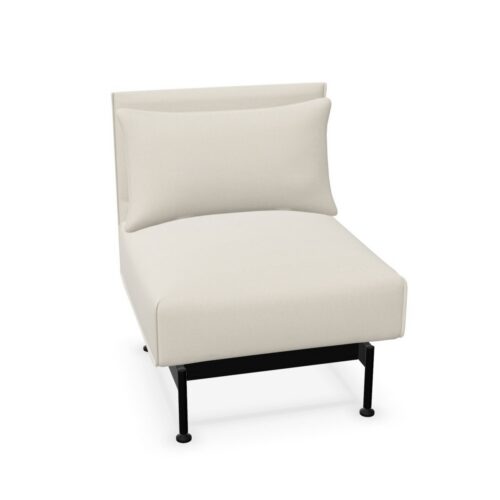
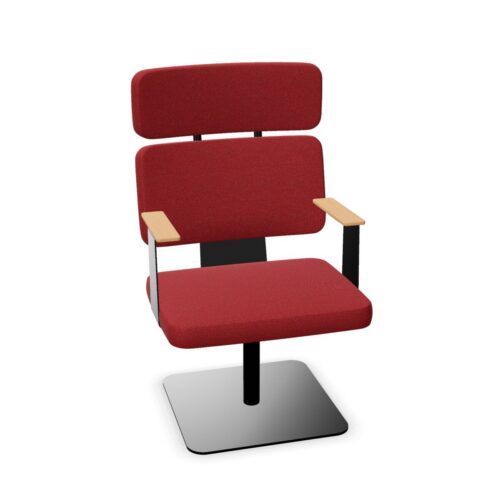
Camira Lounge Furniture Without Armrests

lounge furniture with no armrests and camira upholstery combines an armless seating arrangement with a specified upholstery designation. In shared workplace lounges, this directs attention to how seating positions relate to one another and how people approach the group. Without arms defining the sides, the actual seat and back outline, orientation, and separation deserve particular consideration.

Begin by deciding whether the space should support independent waiting, informal conversation, or a transition between the two. Then assess how the armless form works within that purpose. The absence of arms does not establish a continuous seating surface, a modular construction, or unrestricted access from the sides. Review the actual Camira upholstery appearance alongside the furniture form, and confirm any composition or care details separately. A successful plan gives the open seating edges a deliberate relationship to neighboring people, tables, and circulation.

13 models
From €81.83 p/m
9 models
From €89.03 p/m
3 models
From €195.05 p/m
5 models
From €43.95 p/m
21 models
From €97.75 p/m
6 models
From €316.50 p/m
3 models
From €111.28 p/m
4 models
From €94.99 p/m
3 models
From €90.03 p/m
4 models
From €50.51 p/m
2 models
From €37.39 p/m
5 models
From €97.52 p/m
16 models
From €108.06 p/m
2 models
From €87.20 p/m
4 models
From €44.46 p/m
3 models
From €34.54 p/m
10 models
From €15.13 p/m
2 models
From €27.59 p/m
5 models
From €17.40 p/m
5 models
From €5.06 p/m

Connecting lounge furniture with no armrests and camira upholstery

Shared lounges need a clear relationship between individual occupants and the group around them. Start by deciding whether people are likely to arrive together or independently. This helps establish the social purpose of the arrangement before the furniture is placed.

With armless seating, assess how each place remains recognizable without a side arm marking its boundary. The seat form may contribute to that distinction, but the room arrangement also matters. Use orientation and separation deliberately, reviewing the actual furniture rather than assuming that every armless piece creates the same kind of open seating experience.

Give Open Sides a Defined Role

An open side might face a neighboring seat, a table, or the approach into the lounge. Each relationship calls for a different review. Consider where a person enters the seating position and whether nearby activity competes with that approach.

When comparing lounge furniture with no armrests and camira upholstery, look at the ends of groups as carefully as their centers. An end seat beside circulation has a different context from a place between other occupants. Include personal belongings and the movement of people joining or leaving the area. The absence of arms should be part of the plan, rather than a reason to leave these relationships undefined.

Use Upholstery Appearance to Build Coherence

The selected Camira upholstery can be assessed as part of the visual relationship between seating pieces and the wider interior. Review the actual color and surface appearance in context. Decide whether the lounge should read as one coordinated group or as distinct settings for different activities.

Do not infer composition, acoustic effects, or care requirements from the upholstery designation. Those questions require their own confirmed information. Keep the visual assessment focused on what can actually be observed, including how the upholstery appears across the seat and back. Compare that appearance with the armless outline rather than treating surface and form as unrelated decisions.

Keep Shared Use Understandable

A lounge used by several teams benefits from a clearly expressed purpose. Consider where brief discussions belong, where visitors wait, and how the main route passes the seating. Open sides alone do not make an arrangement suitable for every one of these activities.

Assess the seating position directly and review the care guidance applicable to the actual upholstery. Do not assume that the furniture can be rearranged, linked, or adapted merely because it has no arms. If a changing layout is part of the workplace brief, confirm the relevant characteristics separately. The final arrangement should communicate how people are expected to use the space during a normal working day.

Frequently Asked Questions

Does armless seating form a continuous group?

Not necessarily. The actual seat outline and construction determine the relationship between pieces. Assess them directly before treating adjacent furniture as a continuous seating arrangement or a connected system.

How should an end seat face a walkway?

Review its complete outline, the approach to the seat, and the occupied area beside it. Include belongings and passing movement when deciding how the lounge meets the circulation route.

What should guide upholstery coordination?

For lounge furniture with no armrests and camira upholstery, compare the actual upholstery appearance with neighboring seating and the room. Use the intended activity and visual relationship to guide coordination.

Explore related selections