

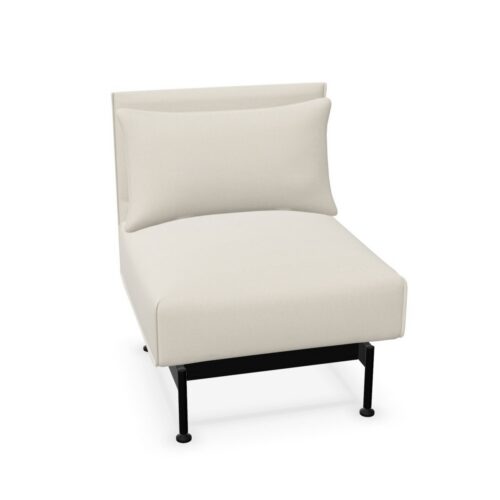
Lounge Furniture With No Armrests and Category 2 Upholstery

lounge furniture with no armrests and category 2 upholstery combines an armless seating form with an upholstery category that needs a clear project reference. This is a useful combination to examine when the room brief calls for open seat sides and a coordinated upholstery decision. Start by defining where the lounge begins and ends within the surrounding workplace. Without armrests, the seating arrangement and nearby objects take a greater role in making those boundaries understandable.

Assess the furniture as part of an occupied space, including people approaching, sitting, and moving between activities. The absence of armrests does not establish a particular footprint or furniture configuration. Likewise, Category 2 does not establish a composition or performance level. Review those details independently while keeping the selected combination central to the brief. This approach gives an armless lounge arrangement a clear purpose and keeps the upholstery category tied to confirmed information.

3 models
From €14.51 p/m
2 models
From €22.69 p/m
€34.30 p/m
€13.82 p/m
2 models
From €13.18 p/m
€27.24 p/m
13 models
From €81.83 p/m
9 models
From €89.03 p/m
5 models
From €43.95 p/m
2 models
From €26.24 p/m
2 models
From €30.05 p/m
3 models
From €22.22 p/m
2 models
From €12.97 p/m
3 models
From €16.82 p/m
3 models
From €17.87 p/m

Define Lounge Furniture With No Armrests and Category 2 Upholstery

Begin with the boundary of the lounge within the room. Identify the main walking route, the intended seating area, and the neighboring activities. Then position the armless furniture so those relationships remain understandable. Open sides may face another seat, an adjacent surface, or the edge of the group, and each position creates a different arrangement to assess. Category 2 supplies the selected upholstery designation for that exercise. Keep it visible in the brief while confirming the actual upholstery reference separately. A clear distinction between spatial decisions and upholstery details makes the complete combination easier to evaluate.

Review Edges Beside Circulation Routes

Where seating borders a walking route, look closely at the relationship between the open side and passing movement. Assess the space as it will be used, with people seated and belongings nearby. For lounge furniture with no armrests and category 2 upholstery, an armless outline should not be taken as proof that a particular placement will work. Compare the actual furniture form with the intended route and direction of approach. Also check the view from the room entrance. A clearly organized group can communicate its purpose through orientation and placement without depending on armrests to define each side.

Turn Category 2 Into a Clear Reference

Keep the full upholstery designation in the project documentation and confirm the information associated with the proposed furniture. The category number should not be interpreted as a quality hierarchy or a material specification. If the room needs visual coordination with existing seating, compare the relevant upholstery sample directly with that setting. Consider the planned lighting and the views from adjoining areas. Record the approved reference so later discussions do not depend on memory or abbreviated descriptions. Any question about care should be answered through the appropriate upholstery instructions, independently of the armless seating requirement.

Assess the Arrangement for Different Activities

A workplace lounge may serve a quiet wait at one time and a group conversation at another. Review those activities as separate layout scenarios. Consider where someone arriving alone would sit, how a colleague would approach the group, and where people would face during a conversation. Check whether the surrounding arrangement communicates those choices clearly. The selected attributes can stay constant while the preferred orientation changes. Compare the individual furniture forms and avoid assuming that armless pieces connect, move, or combine in a particular way. Confirm any additional requirement through the relevant furniture information before making it part of the brief.

Frequently Asked Questions

Does having no armrests make a piece compact?

The absence of armrests does not establish the overall footprint. Review the actual furniture outline against the proposed arrangement. Include the occupied seating area, approach route, and neighboring objects when deciding whether the form suits the space.

How should an armless lounge boundary be planned?

Use seat orientation and the relationship to surrounding routes to make the seating area understandable. Examine open sides at the edges of the group, especially where people pass, approach a seat, or place their belongings.

What does Category 2 add to this selection?

For lounge furniture with no armrests and category 2 upholstery, it establishes the selected upholstery designation. Confirm the associated reference and appearance separately, and use that information alongside the armless layout when assessing the complete proposal.

Explore related selections