

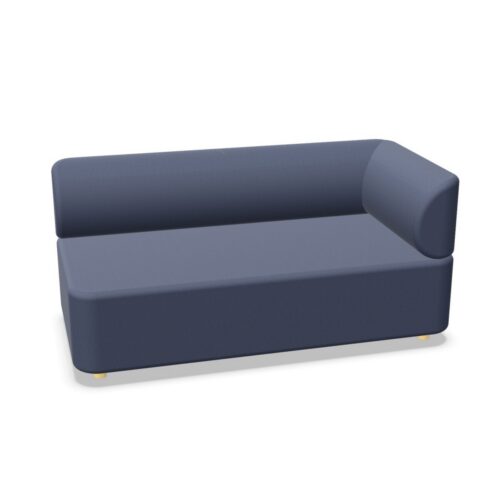
Lounge Furniture With Beige Bases and Fixed Armrests Armrests

lounge furniture with beige bases and fixed armrests armrests pairs a beige base color with armrests whose positions remain set. In an interview lounge, this combination calls for attention to the visual background and the relationship between participants. Beige should be assessed against the floor and surrounding palette, while the fixed arms belong in every decision about seat orientation, neighboring tables, and the approach into the group.

Start with the conversation arrangement rather than the assumption that a pale base will suit any restrained room. Consider what participants see when they enter and how they take their places. The bases may be clearly visible against one background and less distinct against another. Fixed armrests also need to be considered in the occupied layout, particularly beside shared surfaces. Comparing those relationships together gives the color and the seating outline a clear role in the room plan.

3 models
From €27.02 p/m
8 models
From €32.51 p/m
2 models
From €57.11 p/m
7 models
From €66.27 p/m
4 models
From €33.37 p/m
5 models
From €43.95 p/m
2 models
From €34.03 p/m

Orienting lounge furniture with beige bases and fixed armrests armrests

An interview lounge needs a deliberate relationship between the people taking part in the conversation. Establish the seating orientation first, considering how participants face one another and how they enter the arrangement. Fixed armrests form part of each seat's outline throughout that process. Include them when reviewing the approach and the relationship to any shared surface. Beige bases add a separate color relationship with the floor that should be considered from the entrance and from seated viewpoints. The combination works as a planning choice when both its visual role and its place in the conversation layout have been assessed directly.

Check the background from seated viewpoints

With lounge furniture with beige bases and fixed armrests armrests, the base color may have different prominence across the room. Look beyond the entrance view and assess what each participant sees from their intended position. Compare beige with the floor, neighboring furniture, and other visible backgrounds under normal lighting. A close tonal relationship may make the lower outline less distinct, while contrast may emphasize it. Neither outcome should be assumed from the color name alone. Decide how much emphasis belongs at floor level and whether the surrounding palette supports that intention without competing with the overall arrangement.

Position surfaces after the fixed arms

A shared table can influence the relationship between interview participants, so its position should follow a clear seating plan. Review the fixed armrests before deciding where the surface belongs. Consider reach from each seat, the approach into position, and the route used to stand and leave. A table beside an armrest creates a different relationship from a table between facing seats. Compare these arrangements using the actual furniture outlines rather than an empty gap on the plan. Keep any space needed for movement purposeful, and avoid adding a surface solely because the composition appears visually incomplete without one.

Review entry, occupation, and departure together

Assess the full sequence of use rather than only the arrangement at rest. Consider how someone enters while another participant is already seated, how they take their place, and how both leave at the end of the conversation. Check whether the fixed side outlines or nearby tables interrupt those movements. Then review how the group looks when occupied, since people can obscure the beige bases and change the visual balance. Where the lounge shares a room with other activities, ensure its position remains understandable from the approach. Furniture orientation and spacing should establish the arrangement before additional elements are used to complete the composition.

Frequently asked questions

What should guide the first layout decision?

Begin with how participants will face each other and enter the group. For lounge furniture with beige bases and fixed armrests armrests, that establishes the fixed outlines before table placement and color relationships are refined within the room.

Should beige bases contrast with surrounding surfaces?

Choose the relationship that suits the intended composition. Compare a closer tonal relationship with a clearer distinction, using the actual background and normal lighting. Review both seated and entrance views before deciding how prominent the bases should be.

Why assess the lounge while seats are occupied?

Occupants change visible color relationships and the space available for movement. An occupied review helps assess how someone joins or leaves the conversation and whether tables and fixed arms remain in an appropriate relationship throughout that sequence.

Explore related selections