



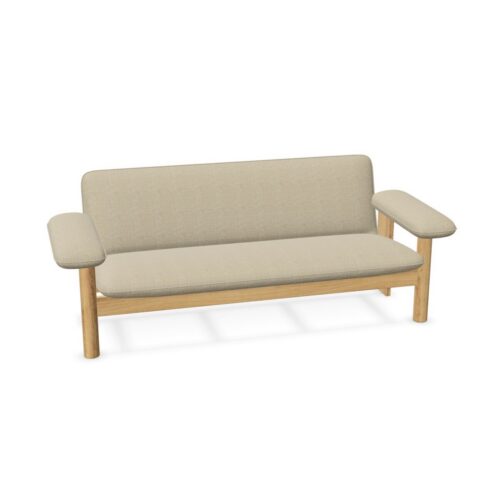


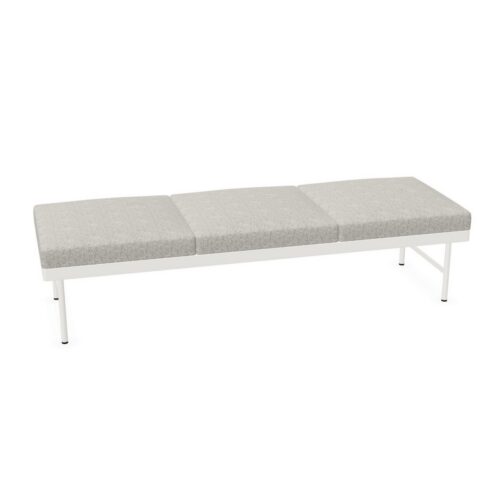
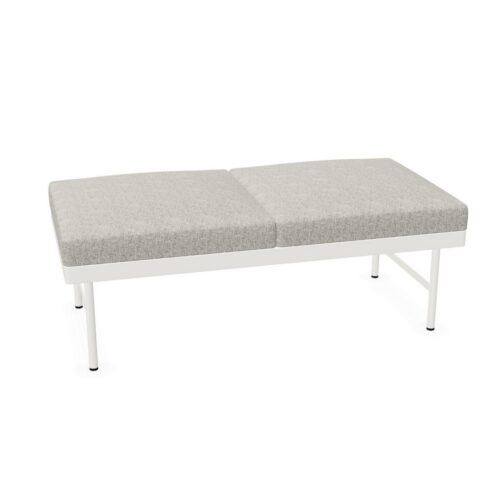
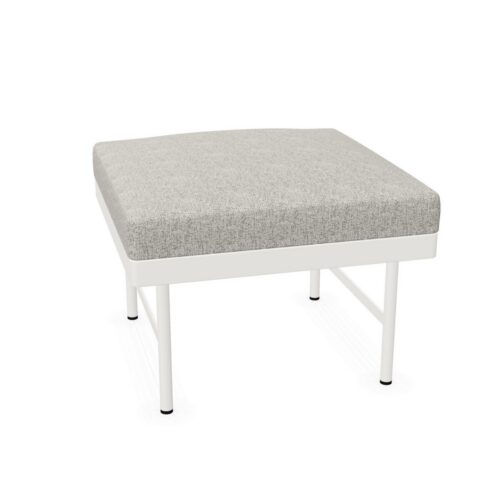
Grouping lounge furniture with brown bases and no armrests
A shared workplace lounge may need to accommodate colleagues who arrive together as well as people using the area independently. Begin by deciding how clearly those situations should be separated. An armless outline allows different visual relationships between neighboring pieces, but the arrangement still needs to communicate where people sit and how they enter the group. Brown bases can create continuity beneath the seating, particularly when their tones relate to the surrounding room. Assess that continuity alongside the practical separation between places. A unified appearance is useful only when the intended pattern of use remains understandable to the people approaching it.
Make the space between pieces purposeful
When arranging lounge furniture with brown bases and no armrests, give each gap a defined role. It may serve as an approach to a seat, separate neighboring positions, or form part of a wider route. Avoid assigning several conflicting purposes to the same area. The absence of arms does not remove the need to consider the complete furniture outline and the movement of occupants. Review where someone stands before sitting and how they leave when adjacent places are occupied. Compare the plan with and without tables, since a surface introduced later can interrupt a side approach that initially appeared available.
