



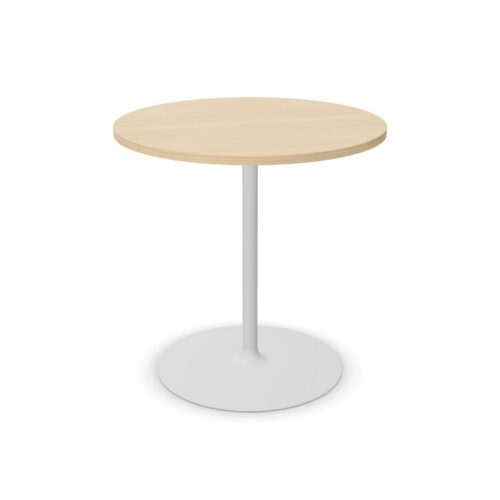

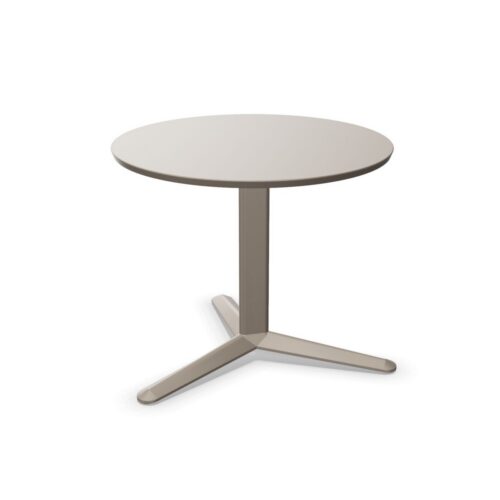
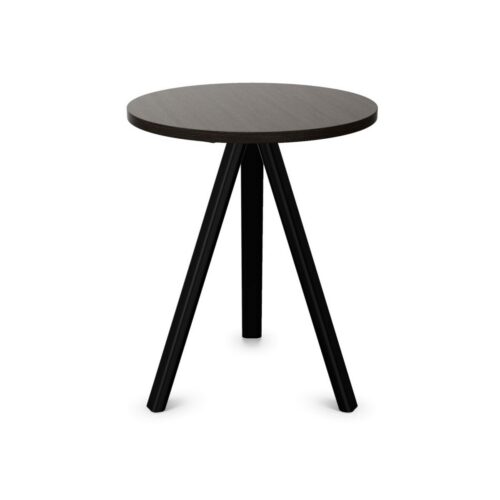
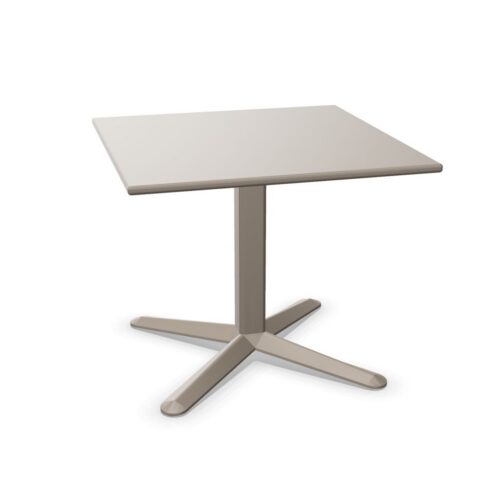
Group lounge furniture with round tops and aluminum bases
Begin with the directions people face when seated. In an informal lounge, chairs may turn toward one another rather than align with the room. A round table should be assessed against those individual positions. Identify where the surface becomes part of the conversation and where a seat remains peripheral to it. Adjust the composition deliberately, keeping the intended group intact. The circular outline can provide a common reference, but the seating arrangement determines how that reference works in practice.
Balance a shared center with an open entrance
A conversation group needs a recognizable way in. Locate that entrance before settling the table at the visual center of the seats. Check whether the approach leads directly toward an occupied position or requires someone to move around the table to join. Review the relationship from the room's main passage as well. The most useful placement decision considers both the people already seated and the person arriving, especially in reception areas where the route through the lounge remains active.
Look beneath the circular perimeter
The aluminum support may present a different outline from the round top. Examine the actual relationship between the two, paying attention to the parts visible near seat entrances and foot positions. Do not assume that the base shares the top's shape or that aluminum establishes a particular visual finish. Compare the table from seated viewpoints, where the support may be more apparent than it is from above. This helps connect the material choice to the composition you are planning.
