









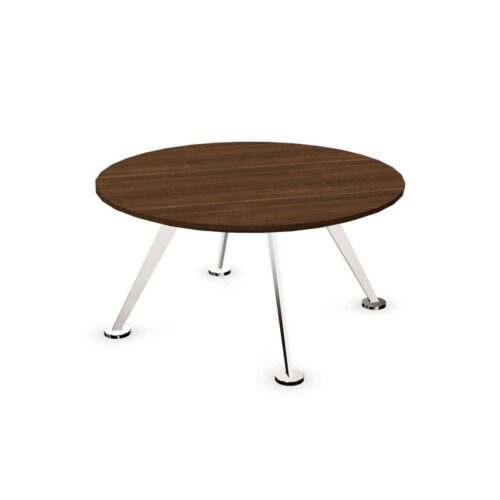


Planning lounge furniture with round tops and metal bases
Begin with the conversation arrangement. A round table can become the visual reference point for seats placed around it, but each seat still needs a deliberate relationship to the surface. Mark where people would sit, where they would enter the group, and where they might place a cup or notebook. An arrangement that looks balanced from above may leave one position awkwardly separated from the table. Judge access from every intended seat before settling on the composition.
Keep approaches clear around the circle
A curved outline changes the way the table meets the surrounding space. Review the route into the seating group separately from the route past it. People joining a conversation should not need to cross the main passage or step between another person's seat and the shared surface. Pay particular attention to approaches beside doorways and at changes in direction. The round top provides a consistent outline, but the seats, base, and neighboring furniture determine how the complete arrangement occupies the room.
Read the base beneath the tabletop
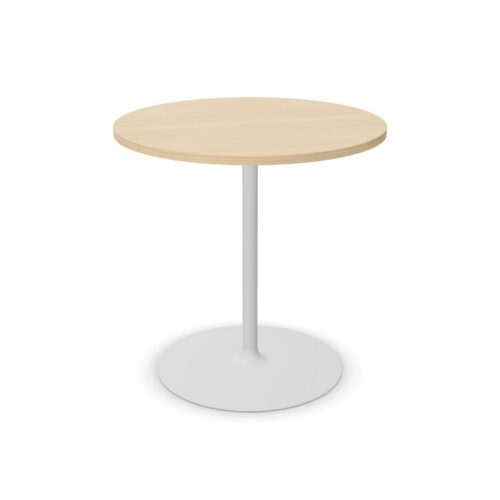
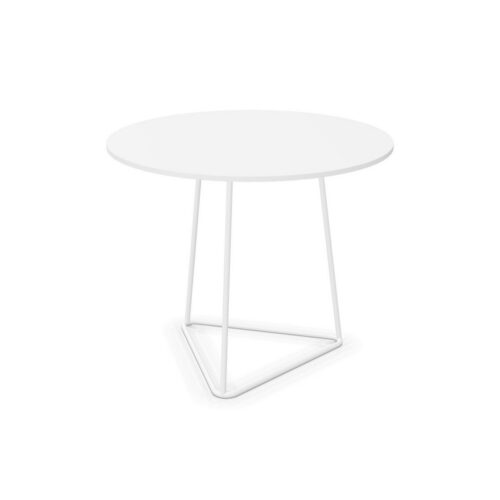
Metal identifies the base material; it does not establish a particular support design, finish, or floor contact arrangement. Examine how the actual base relates to the round top. Parts that extend toward the perimeter deserve attention near seated feet and walking routes. Also consider the view from the entrance: an exposed base may have a stronger visual presence than it does in a plan. Use that observation to judge the relationship between the table and the surrounding seats, without assuming that all metal bases look alike.
