

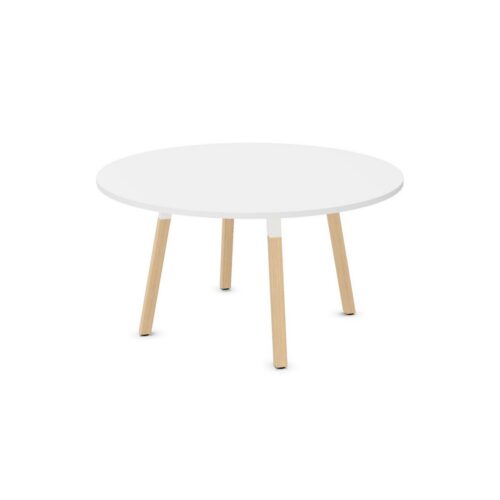
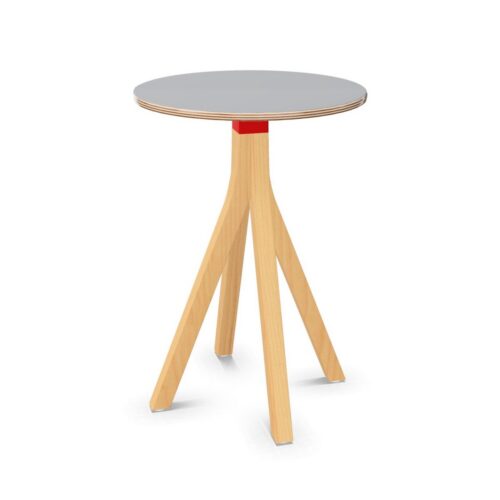
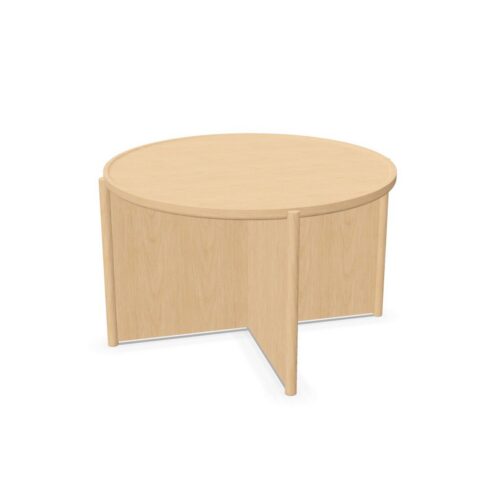
Lounge Furniture: Round table top shape, Wood base material

Lounge furniture with round tops and wood bases brings a circular surface into seating areas that may be approached from several directions. The round top has no long or short edge, so its relationship with the seating depends on position rather than orientation. The wood base adds a material decision beneath that outline, making it useful to consider the table both as a shared surface and as a visible element within the lounge.

Start with the seats that need to relate to the table. A circular top between individual chairs creates a different arrangement from one in front of a sofa. Compare each seated viewpoint and the routes around the group before deciding where the center belongs. A round outline does not establish the support layout, and a wood base does not identify the top material. Keep those details separate while developing the arrangement.

4 models
From €31.59 p/m
2 models
From €7.46 p/m
2 models
From €9.35 p/m
5 models
From €21.48 p/m
3 models
From €5.13 p/m
12 models
From €12.07 p/m
2 models
From €24.29 p/m
5 models
From €22.26 p/m
2 models
From €8.28 p/m
4 models
From €19.64 p/m
2 models
From €12.24 p/m
€16.40 p/m
€11.03 p/m
€17.75 p/m

Place the Center Where It Serves the Group

Begin with the actual seating positions rather than the geometric center of the room. A circular surface can sit between chairs, beside a sofa, or within a wider conversation group. In each case, locate its center according to the seats it is intended to accompany. A visually central position is not automatically the most useful one.

Review the arrangement from every main seat. The round perimeter is consistent, but the relationship between a person and the surface changes with the position of their chair. Use those different viewpoints to refine placement before coordinating the rest of the lounge.

Compare Lounge Furniture With Round Tops and Wood Bases

The circular top and wood base should be assessed together without treating them as a complete description of the table. The shape establishes the perimeter; the material establishes what the base is made from. The top material, finish, and supporting arrangement remain separate considerations and should be confirmed for each piece under review.

For lounge furniture with round tops and wood bases, look beneath the surface from several angles. A circular outline does not imply a central support or any particular leg arrangement. The actual base configuration should inform where chairs and adjacent furniture are placed.

Test the Route Around the Circle

Trace the path from the lounge entrance to each seat. Then consider the route used by someone passing the group without joining it. These movements may follow different sides of the table. Assess the complete circular outline within both routes, including the space occupied by nearby chairs when people are seated.

A round top can sit within an arrangement of straight sofas without repeating their geometry. Decide whether it should occupy the center of that composition or sit to one side as a shared point between particular seats. Either approach needs a clear relationship with the surrounding furniture.

Control Repetition and Material Relationships

Where several seating groups are visible together, decide what should connect them. Repeating a round outline is one option; repeating a consistent placement principle is another. The tables do not need to occupy identical positions if the seating arrangements differ. Keep the pattern understandable from the main approach through the room.

When coordinating lounge furniture with round tops and wood bases, compare visible base finishes with existing wood elements. Do not assume that a shared material description means the appearances will match. Judge the relationship using confirmed details and the views people will have from the surrounding seats.

Frequently Asked Questions

Does a round top need to sit in the middle?

No. Place it according to the seating positions it accompanies. The center of a conversation group may differ from the center of the room, and a table shared by neighboring chairs may belong between those chairs.

Can I assume the base has a central support?

No. Lounge furniture with round tops and wood bases identifies the circular top and base material only. Check the actual supporting arrangement before planning chair positions or making assumptions about the space beneath the top.

How can circular tables relate to straight sofas?

Use position to establish the relationship. Compare the circle with the sofa frontage, nearby chairs, and the entrance to the group. A deliberate offset can be appropriate when the surface is intended for particular seats rather than the entire sofa.

Explore related selections