

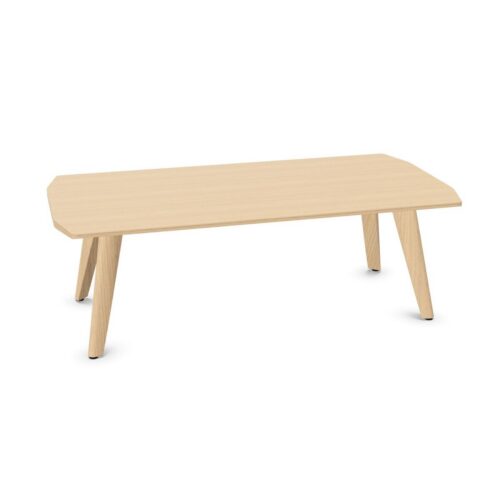
Lounge Furniture With Rounded Both Sides Tops and Red Bases

Lounge furniture with rounded both sides tops and red bases combines a top described by its rounded sides with a defined color below the surface. This pairing needs to be considered through the actual outline rather than through the shape description alone. In a workplace lounge, its suitability depends on how the top relates to the occupied seats, the approaches to the group and the places from which the red base becomes visible.

Begin with the seating relationship you need to establish. Compare the orientation of the rounded sides to the sofa or chairs, then check the remaining perimeter against nearby furniture and routes. Red introduces a separate visual decision at the base. Assess it from the entrance and seated positions so the overall combination has a clear role within the room, whether as a localized accent or part of an existing color connection.

2 models
From €25.77 p/m
4 models
From €35.51 p/m
12 models
From €9.73 p/m

Planning lounge furniture with rounded both sides tops and red bases

The shape description is a starting point for assessment. Examine the complete top outline and identify how its rounded sides relate to the rest of the perimeter. Then position that outline within the intended seating arrangement. Check which parts face occupied seats and which meet the approach to the group. Compare alternative orientations without assuming that every side has the same relationship to the room. The useful arrangement is the one that makes sense from both the seating and the principal entrance. Keep the wider room visible during this exercise, including any neighboring groups that might affect how the shape is perceived or how people approach their seats.

Look beyond the rounded portions

With lounge furniture with rounded both sides tops and red bases, the rounded sides should be assessed as part of the whole surface. Review the remaining outline with equal care. It may face a seat, an open approach or another piece of furniture, and each relationship deserves attention. Avoid treating the shape description as a guarantee that movement around the setting has been resolved. Trace the routes people will use when joining and leaving the group, including those passing behind occupied seats. Compare the top from several angles rather than relying on a single appealing view. A complete perimeter review gives the seating arrangement a more reliable basis for selection.

Place red within a clear room palette

The red base contributes color beneath an outline that already warrants attention. Decide how those two elements should work together visually. Red might connect the setting to a nearby accent or distinguish it within a broader lounge area. Review its actual visibility before adding further repetition. Seating can conceal parts of the base, while an open approach may reveal more of it. Consider the floor and the colors immediately surrounding the base, since these frame the accent at eye level. Use the intended room lighting when comparing the relationship. This keeps the palette decision connected to the setting rather than to an isolated view of the furniture or a separate color sample.

Compare placements through a consistent sequence

Assess lounge furniture with rounded both sides tops and red bases by keeping the seating purpose constant across each possible arrangement. First review orientation, then the relationship of the complete perimeter to occupied seats, and finally the visibility of the red base. This sequence helps distinguish a shape decision from a color decision without separating them in the final composition. Check the view from the entrance and from neighboring groups before settling on a position. If an adjustment improves one view but weakens another, identify which viewpoint is more important to the room's use. Record the reason for the final placement so it remains understandable when the wider lounge arrangement is reviewed.

Frequently asked questions

Does the shape name establish the complete outline?

Use the actual outline to understand the complete perimeter. The rounded sides are part of that assessment, alongside the portions facing seats and the approaches to the group.

Which way should the rounded sides face?

Compare their relationship to the occupied seats and room approach. There is no universal orientation; the surrounding seating and the complete outline should determine the most coherent arrangement.

What should the final comparison include?

Compare lounge furniture with rounded both sides tops and red bases through orientation, perimeter relationships and visible red. Include the entrance view and occupied positions in the same assessment.

Explore related selections