



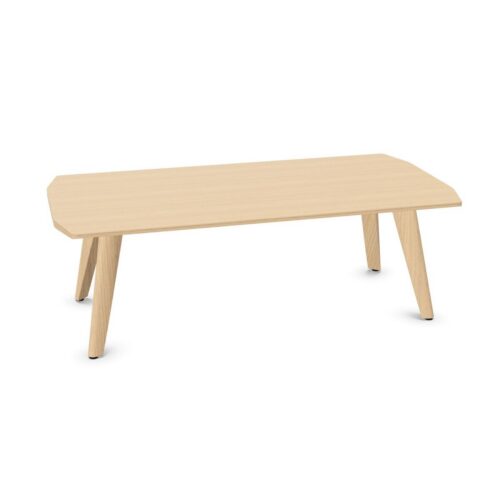


Positioning lounge furniture with rounded both sides tops and black bases
Identify exactly where the rounding appears within the tabletop outline. The selected description establishes that both sides are rounded, but the complete design still needs to be reviewed. Note how those portions connect with the rest of the perimeter and decide which should face the main seating positions. This is especially useful when the table sits between a sofa and separate chairs. A rounded portion facing an approach creates a different spatial relationship from one facing a seated person. Compare those orientations within the actual room arrangement, including the base, before deciding which view should guide the placement.
Distinguish curved edges from clear routes
A rounded edge changes the outline people move around, but it does not by itself establish a suitable passage. Review the whole table against the route into and out of the seating group. Consider where someone turns, where a seated person's belongings may be placed, and whether another person can approach their intended seat. Pay particular attention to transitions between rounded and other parts of the perimeter. These junctions can matter to placement even when the overall form looks visually soft. Keep the route assessment separate from aesthetic preference so that an attractive curve does not become the only reason for a particular position.
