



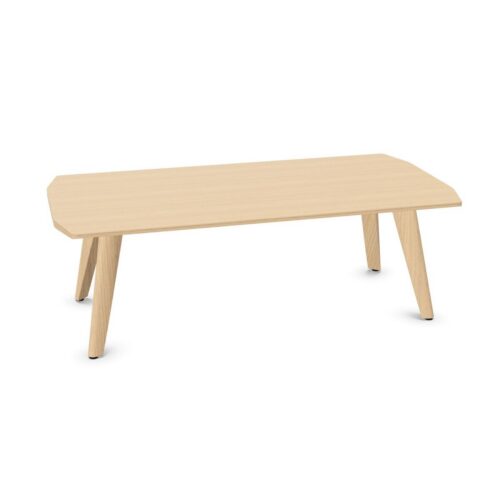




Assessing Lounge Furniture With Trigoon Tops and Beige Surfaces
Start with a clear representation of the actual tabletop perimeter. Place that outline within the seating plan and examine how it meets the group from each direction. Do not substitute a familiar geometric shape simply because it seems similar to the trigoon designation. The relevant question is how the specific top relates to the intended users. Compare possible orientations while keeping the seats in the same positions, then identify which arrangement gives the table a clear role within the lounge rather than treating it as an isolated visual feature.
Make Orientation an Explicit Decision
Record which part of the perimeter faces the main seating line and which faces the approach route. This gives everyone reviewing the proposal a shared understanding of the intended arrangement. If the top is turned, reconsider every adjacent seat rather than checking only the main viewpoint. The outline may relate differently to different parts of the group. Include neighboring furniture and people moving through the room when reviewing the plan. A distinctive shape still requires the same careful assessment of placement as any other shared lounge surface.
Relate Beige to the Whole Composition
When reviewing lounge furniture with trigoon tops and beige surfaces, assess the color and outline together. A shape that is visually noticeable in one palette may read differently when the tabletop is close in color to its surroundings. Decide whether the brief calls for the perimeter to become prominent or for the surface to sit within a coordinated neutral scheme. Compare the proposed beige tone with actual interior references under the intended lighting. Keep judgments about color separate from unconfirmed assumptions about texture, sheen, or the material beneath the surface.
