



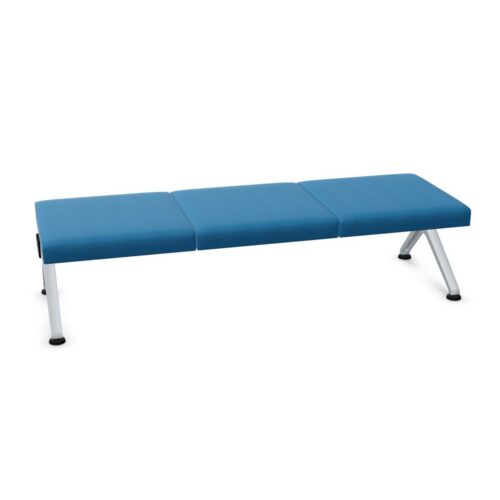
Planning lounge furniture with no upholstery upholstery and silver bases
Begin with the role of the lounge area. An entrance setting needs a clear relationship to reception and onward circulation, while a lounge beside a meeting area may need a more contained arrangement. Place the furniture on a floor plan before deciding how strongly the silver bases should feature in the room. Look at the visible area beneath each piece and the gaps between adjacent forms. These details influence whether the arrangement reads as a connected group or as separate objects, particularly when seen across an open floor from the main approach.
Give the exposed form a clear setting
With no upholstery, the upper form remains central to the visual assessment. Examine its outline against the background rather than assuming that a neutral room will suit every shape. A busy wall treatment can compete with a pronounced silhouette; a plain background may make that silhouette more noticeable. Assess the furniture from the side as well as the front, since an approach route rarely provides only a frontal view. Keep surrounding elements deliberate so that the absence of upholstery becomes part of a coherent composition instead of leaving the furniture visually disconnected from the room.
Relate silver bases to the floor
When comparing lounge furniture with no upholstery upholstery and silver bases, inspect the actual silver appearance alongside the intended flooring. The word silver does not establish how reflective, pale or visually prominent a particular base will be. Review a representative sample or the furniture itself under the room's lighting. Notice whether the base outline remains distinct or blends into the background. If other silver details already appear nearby, consider their placement and visual weight. Coordination can come from a few carefully positioned repetitions; every visible detail does not need to repeat the same appearance.
