


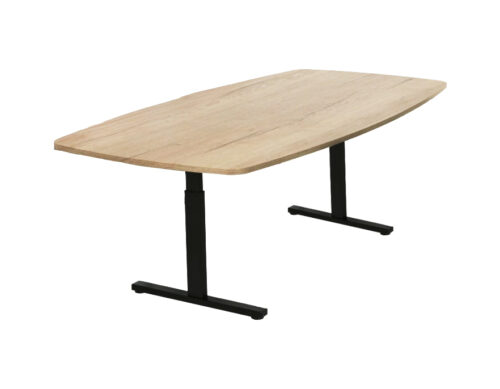
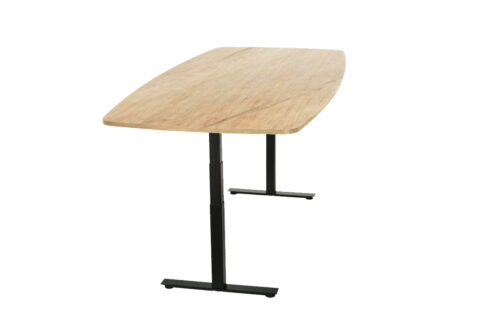
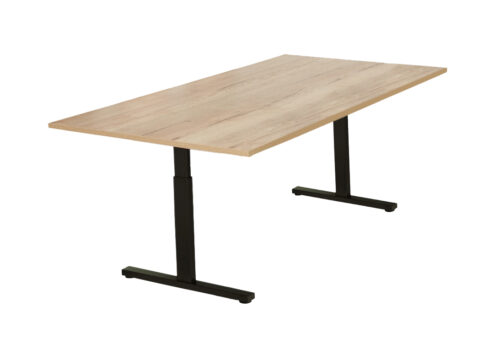
Planning manually adjustable stationary conference tables
A stationary table can remain the reference point for the room while its working level changes. That distinction is useful where the table position suits the space but different activities may need different surface settings. Start by identifying those activities, then verify that the available adjustment supports them.
Do not equate a stationary arrangement with a single way of using the room. Participants may still change seats, turn toward a display or gather around shared materials. Plan those variations around the table's established location. Manual height adjustment adds another possible change, subject to the table's actual procedure and available settings.
Choose the Floor Position Before the Routine
Place the table where its ongoing presence works with the entrance, presentation area and surrounding furniture. Check how participants approach each seating position and how someone leaves during a discussion. A stationary table calls for a layout that remains workable without depending on routine movement of the table itself.
Consider the activities that happen beside the meeting arrangement as well. Access to storage, movement toward a screen and the handling of personal belongings can all compete for the same routes. Keep these uses visible in the plan so surface adjustment takes place within a room that already functions well.
