


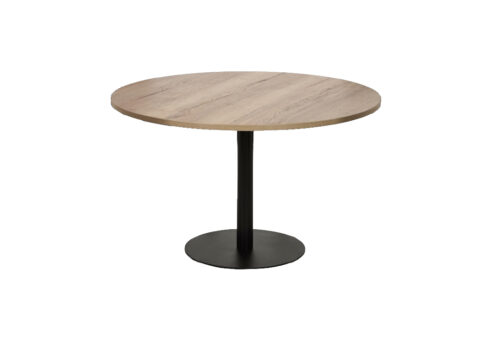
Place Fixed-Height Non-Stackable Conference Tables Deliberately
Choose the main table position around the room's regular discussion pattern. Participants should be able to find a place, face colleagues and use shared materials without competing with the main walking route. A consistent working level makes seating compatibility a central part of this initial decision.
Then look at what happens outside the meeting itself. People may enter early, leave briefly or approach a shared display while others remain seated. Keep those actions possible in the normal arrangement. Non-stackability does not determine mobility, so do not assume either frequent movement or a permanently fixed floor position from these characteristics alone.
Resolve the Chair and Surface Relationship
Because the table height cannot change, assess chairs with the surface before settling on the room arrangement. Look at armrests, seated reach and how easily participants can move into position. The relevant judgment is how the furniture works together during an actual meeting, including writing and using personal work materials.
Consider different users rather than relying on a single person's impression. A comfortable arrangement for one participant may place another too far from the working surface. Review access and seating needs directly, and avoid treating a fixed table level as evidence that every chair or seating position will work equally well.
