

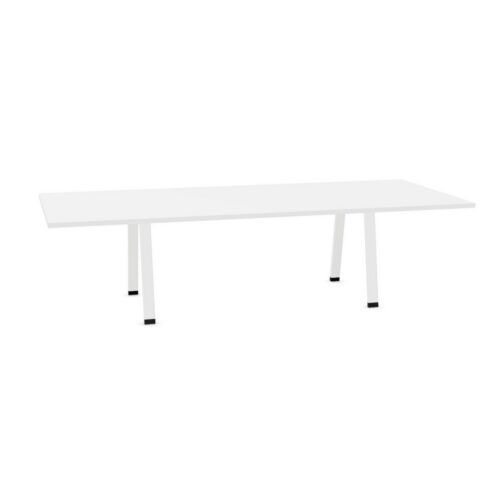
Fixed-Height Tables for Conference Rooms

Fixed-height conference tables provide a meeting surface that stays at the same working level. This makes the relationship between the table, seating and surrounding circulation central to room planning. Rather than planning for changes in table height, focus on how people approach their places, settle into a discussion and leave without disrupting colleagues. The arrangement should support the way the room is normally used, whether meetings center on conversation, documents or shared screens.

Choosing a fixed working level also means giving careful attention to the chairs used alongside it. Consider how chair arms meet the table edge, whether participants can sit comfortably and how easily seats move away from the surface. Fixed height describes the table’s adjustment capability alone; it does not establish the frame layout or other features. Assess those details separately when deciding how the table will work within the room.

2 models
From €18.78 p/m
8 models
From €30.61 p/m
11 models
From €21.26 p/m
10 models
From €16.65 p/m
3 models
From €58.63 p/m
9 models
From €22.04 p/m
18 models
From €27.49 p/m
6 models
From €28.06 p/m
3 models
From €125.11 p/m
3 models
From €20.05 p/m
2 models
From €28.04 p/m
€9.29 p/m
2 models
From €9.51 p/m
€11.34 p/m
2 models
From €19.95 p/m
2 models
From €10.48 p/m

Planning Around Fixed-Height Conference Tables

Begin with the activities that happen most often. A room used for seated discussions needs a table and chair relationship that lets participants rest their arms naturally and see one another. Place the table according to those routine activities before considering occasional events that may require a different arrangement.

Walk through the meeting sequence from arrival to departure. Participants should be able to reach an available chair, pull it back and leave their place without making everyone else move. A fixed working level simplifies that particular aspect of the setup, but circulation still depends on the complete room arrangement.

Make Seating Compatibility a Priority

Assess chairs beside the table rather than judging either item in isolation. Check the position of armrests, the seated working posture and the space available beneath the surface. A chair that feels comfortable by itself may create an awkward relationship with a table when the two are brought together.

Think about the people who regularly use the room and those who visit occasionally. Fixed-height conference tables cannot change their working level to suit a different activity or participant. That makes an accessible approach and a considered seating arrangement especially relevant. Evaluate actual user needs instead of assuming that a familiar room layout will suit everyone.

Keep Shared Activities Within Easy Reach

Documents, notebooks and shared presentation materials should have a clear place in the meeting arrangement. Consider where participants will put their belongings and how items will pass between colleagues. Avoid a layout that requires people to lean across another person's working area whenever something needs to be shared.

For meetings involving a screen, test sightlines from the proposed seating positions. Fixed-height conference tables establish a consistent surface level, while the screen and chairs determine how comfortably people can follow the discussion. Check whether a participant turning toward the display blocks a neighbor's view or interrupts an established route through the room.

Decide Whether a Consistent Level Fits

A fixed table height makes sense when the intended working posture remains consistent. If the room regularly shifts between activities that need different surface levels, compare that requirement with what a nonadjustable table can provide. Make the decision around real meeting routines, including preparation, use and the return to the usual arrangement.

Do not use height adjustment as a shortcut for judging unrelated characteristics. Fixed height does not tell you whether a table can be moved or stacked. Check any additional requirements independently, then review how the complete table and seating arrangement affects the room's doors, storage access and established walking routes.

Questions About a Fixed Meeting Level

Can seating compensate for a fixed table height?

Suitable seating can improve the relationship between the participant and the surface, but it does not change the table itself. Assess seated posture, arm placement and access together, particularly where people have different requirements or use the room for extended discussions.

Are fixed-height conference tables necessarily stationary?

No. Height adjustment and mobility are separate characteristics. A table without height adjustment may have other features affecting movement, so assess those independently. Plan its position around the actual table characteristics and the routes that people need to use.

What should a room trial include?

Try arriving, sitting down, using meeting materials and leaving the table. Include a participant turning toward a shared screen where relevant. This reveals practical conflicts between chairs, walking routes and the working surface before the arrangement becomes part of everyday use.

Explore related selections