

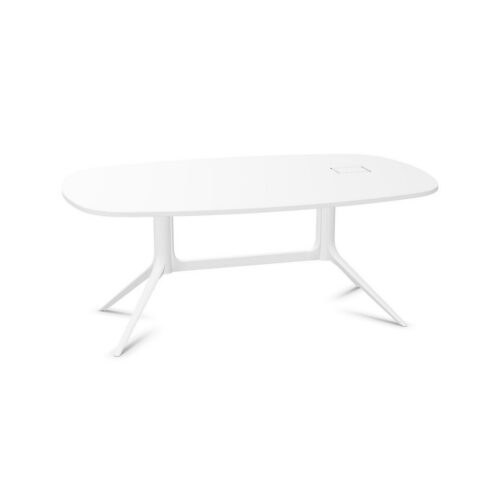
Silver Bases Beneath Elliptical Conference Tops

Conference tables with elliptical tops and silver bases pair an elongated curved surface with a silver-colored element beneath it. The combination gives you separate decisions to coordinate: how the tabletop organizes a meeting, and how the base relates to surrounding furniture. Silver describes the selected color; it does not establish the base material or its finish characteristics. Assess its appearance in relation to the room rather than assuming a particular construction.

Start by locating the main presentation position and the routes between the doorway and seats. The elliptical outline will affect how chairs turn around the ends, so the arrangement should follow the meeting’s needs. Then compare the visible base with nearby chair frames, storage details, and flooring. An effective choice brings those relationships together without allowing a coordinated color scheme to outweigh practical access or comfortable positioning around the table.

28 models
From €18.24 p/m
12 models
From €55.42 p/m
7 models
From €10.56 p/m
10 models
From €24.99 p/m
4 models
From €36.06 p/m
€8.32 p/m
€14.12 p/m
€10.80 p/m
26 models
From €8.36 p/m
8 models
From €8.63 p/m
€14.17 p/m
2 models
From €33.11 p/m
2 models
From €139.62 p/m
3 models
From €25.69 p/m
10 models
From €48.26 p/m

Positioning conference tables with elliptical tops and silver bases

Map the room's focal points before deciding which way the table should face. A wall display, writing surface, or regular presenter position may influence the arrangement more than visual symmetry. Follow the elliptical edge with proposed chair positions and review the view from each part of the perimeter. Where chairs turn around the ends, participants may face a different direction from those along the sides. Check the routes behind occupied chairs as part of this exercise. A table can appear centered in a room while still placing an awkward movement path beside a frequently used doorway.

Compare silver with nearby finish colors

Look at the silver base alongside the visible details already present in the room. Chair frames, door hardware, and storage handles may provide useful color references, although they do not all need to match. Decide whether the base should connect with those elements or remain visually distinct. Compare appearances under the room's normal lighting and from a seated viewpoint. Do not infer reflectivity, texture, or material from the color name. Those are separate characteristics to establish when assessing a particular table, especially if you are trying to coordinate it with existing furnishings that have a specific appearance.

Separate perimeter planning from support placement

The curved tabletop describes the outer boundary of the working surface; it does not reveal where the supports sit beneath it. When assessing conference tables with elliptical tops and silver bases, review both views together. A chair may align neatly with the edge but still require adjustment around a support. Consider where participants place their feet and how they approach the seat. Give particular attention to transitions around the ends, where neighboring chairs change direction. This review helps establish a practical seating pattern before visual alignment with the room becomes the main concern during the final layout decision.

Plan the room beyond the tabletop

Meeting rooms often need access to writing surfaces, stored materials, and presentation controls during use. Keep those activities in mind when assigning the table's position. Someone retrieving a document should have a clear route that does not rely on another participant moving their chair. Consider bags and other belongings as part of the occupied room, with an appropriate place away from circulation paths. The silver base can then be assessed within a realistic setting of chairs and working materials. Review the composition from the entrance once the practical arrangement is settled, looking for a coherent relationship between the curved outline and surrounding furniture.

Questions about silver bases and elliptical tops

Does a silver base mean a particular metal?

No. Silver is the selected base color. Establish material and surface characteristics separately when comparing a particular table with the room's existing furnishings.

Should every chair face the same direction?

That depends on the meeting. A presentation may suggest a shared focus, while discussion requires participants to see one another around the curved perimeter.

What deserves the closest layout check?

With conference tables with elliptical tops and silver bases, examine chair movement near the curved ends and actual supports, alongside the routes to doors and shared presentation areas.

Explore related selections