

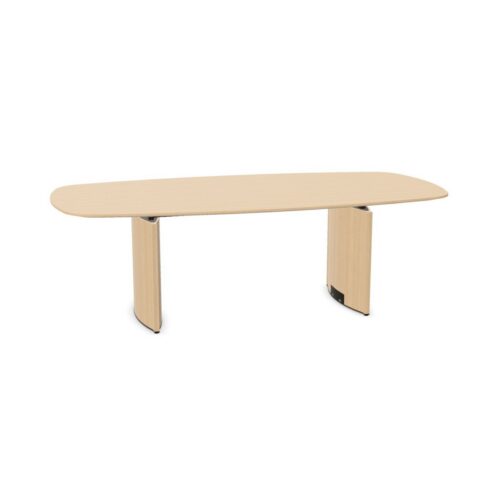
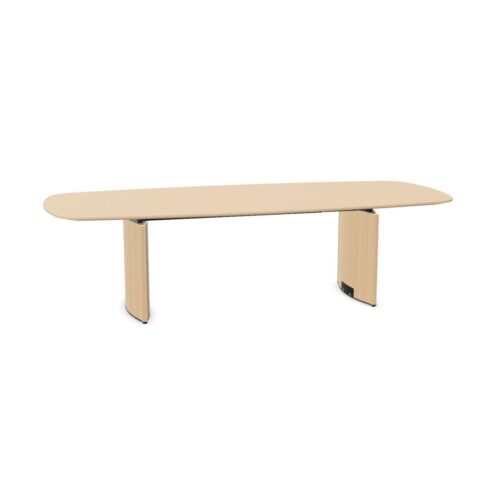
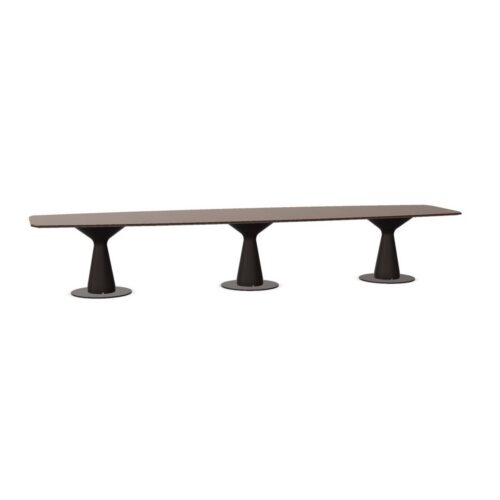
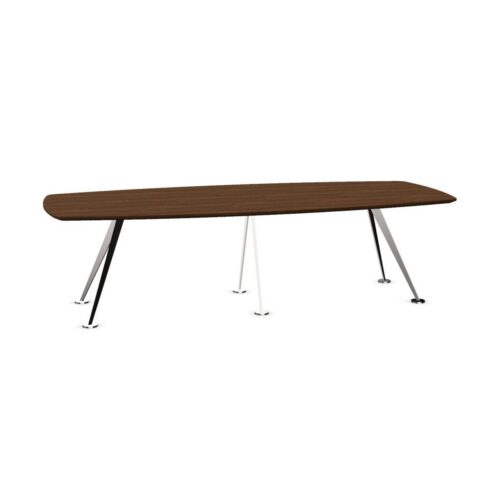
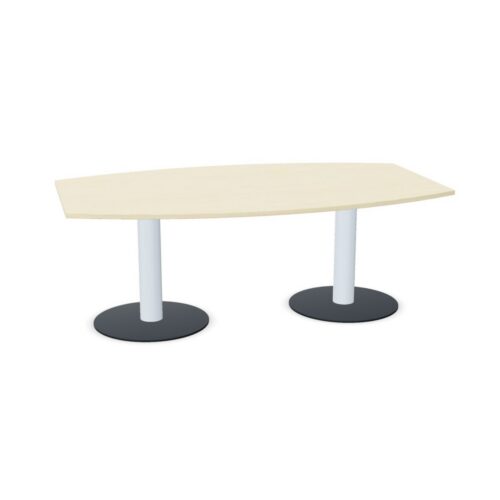
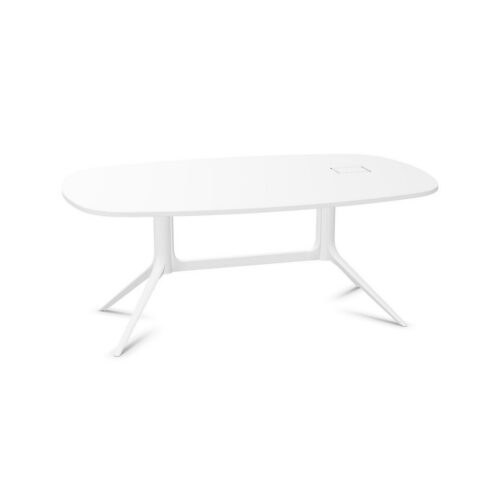
Silver Bases Below Tops Rounded Both Sides

Conference tables with tops rounded on both sides and silver bases combine a curved tabletop outline with a silver-colored element beneath the meeting surface. Silver describes the base color; it does not establish a particular material, sheen or construction. Consider its visual relationship with nearby furniture while evaluating the rounded sides through the way people sit, share documents and move around the table.

Start with the furniture that will remain in the room. Chair frames, storage details and presentation equipment may introduce related colors, but they do not all need to match. Review those relationships from normal seated and standing positions. Then place chairs against the actual curved outline and check access below the surface. A clear understanding of the base arrangement matters more for foot placement and chair movement than the color description. Bring these observations together before settling the table’s position within the room.

8 models
From €12.16 p/m
8 models
From €30.83 p/m
30 models
From €16.42 p/m
5 models
From €25.05 p/m
2 models
From €9.37 p/m
13 models
From €8.10 p/m
5 models
From €10.64 p/m
€25.85 p/m
2 models
From €6.67 p/m
10 models
From €22.93 p/m
10 models
From €29.42 p/m
2 models
From €51.00 p/m
3 models
From €10.00 p/m
2 models
From €21.24 p/m
5 models
From €57.99 p/m
24 models
From €23.43 p/m
4 models
From €36.10 p/m
10 models
From €48.26 p/m

Conference Tables With Tops Rounded on Both Sides and Silver Bases

Separate the known visual properties from the practical relationships that need checking. The tabletop is rounded on both sides, so seating should respond to that actual outline. The base is silver in color, so its appearance should be considered alongside the room's other visible finishes. Neither property establishes how the base is arranged beneath the surface. Begin by placing the table in relation to the entrance and presentation area, then position chairs for the usual meeting tasks. This provides a working context for deciding whether the silver base should connect with surrounding details or remain a distinct element below the tabletop.

Compare Silver With the Finishes Already Present

Related colors can look different when placed beside each other. Examine the silver base against chair frames, storage details and any other nearby elements without assuming a shared surface treatment. Silver-base meeting tables with rounded sides do not require a room filled with matching silver details. A limited connection can be enough if the wider palette already has a clear structure. Review the base under the lighting normally used for meetings and from the room's ordinary approaches. This is a visual comparison only: the color does not tell you whether a surface is reflective, matte or made from any particular material.

Review the Working Area Below the Surface

The rounded tabletop edge and the base beneath it need separate attention when assessing chair positions. Follow where each chair rests during discussion and where participants place their feet. Check how chairs move when people turn toward a display or stand to leave. Rounded-sided conference tables with silver bases should be judged through the actual structure below the top, rather than through an assumption that the base follows the curve above. Keep access to seating clear of temporary belongings. This gives the room a practical arrangement for everyday use while allowing the silver color to play its intended visual role.

Position the Curve for Shared Meeting Tasks

Use the most common tasks to guide the table's orientation. For document review, consider whether participants can see and reach the material from their usual places. For presentations, check the relationship between the curved sides, chair angles and display position. Then walk behind occupied seating to assess movement toward the doorway and shared storage. A useful arrangement connects these tasks without depending on the rounded outline to create circulation automatically. Look again from the entrance once the chairs are placed: the silver base, tabletop curve and surrounding furniture should be assessed as parts of the same working room composition.

Questions About Silver Bases and Rounded Sides

Does silver describe a metal base?

No. Silver identifies the selected color. It does not establish the base material, construction or surface treatment. Keep those characteristics separate from the color comparison and assess the actual structure when reviewing chair movement and access beneath the tabletop.

Should silver chair frames match the base exactly?

An exact match is optional. Compare the visible finishes together and decide whether their relationship appears deliberate. Differences can be more noticeable when elements are adjacent, so review them in the intended arrangement rather than as isolated details.

Which chair movements deserve attention?

Check sitting down, turning toward a display and standing to leave. Review those movements around the rounded sides with neighboring chairs in use. The practical result depends on the chair positions and actual base arrangement as well as the tabletop outline.

For conference tables with tops rounded on both sides and silver bases, map the intended seats before deciding how the table will sit within the room.

Keep conference tables with tops rounded on both sides and silver bases in view while comparing placement, access and the surrounding interior.

Explore related selections