






Separate Silver Color From Other Characteristics
Silver identifies the selected base color, leaving material, texture, and reflectivity unspecified. Avoid using the name as a shortcut for those characteristics when planning the room. Compare the actual appearance with nearby chair frames, floor tones, and other furniture. A close relationship may create visual continuity, while a different tone can distinguish the table. Decide which relationship you want before judging the combination. Lighting also affects how colors are perceived, so review the base under the conditions normally used for meetings, including any change made when presentation content is shown.
Conference Tables With Round Tops and Silver Bases
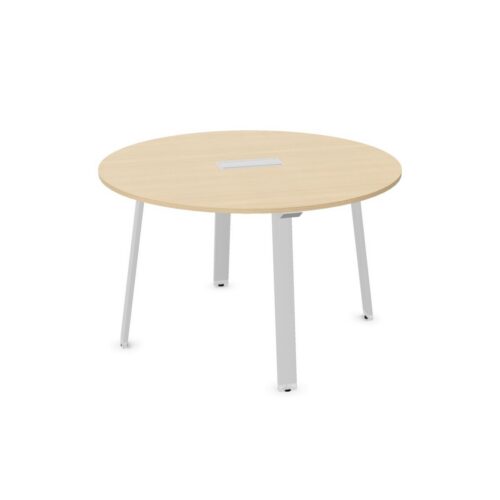
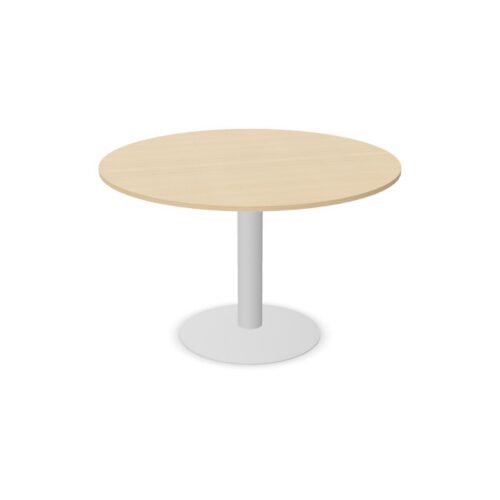
The curved tabletop and silver base influence different parts of the planning process. The top establishes the meeting perimeter, while the base contributes to the setting below it. When assessing conference tables with round tops and silver bases, include the chairs early. They determine how people approach the surface and change how much of the base remains visible. Look across the room from the entrance and then consider the seated view. A coherent setting does not depend on an exposed base; it depends on a sensible relationship between furniture, activity, and movement.
Choose a Focus for Each Meeting Format
For discussion, arrange participants with clear views toward one another. For a screen-led session, review their relationship with the display separately. A circular top has no built-in front, but the room may have a strong direction because of its presentation wall. Consider how often participants switch between these types of attention. Place the table so that the most frequent activity works well, then assess the other use. Avoid assuming that positioning the table in the center automatically resolves viewing or access. The door and surrounding facilities remain part of the decision.
