


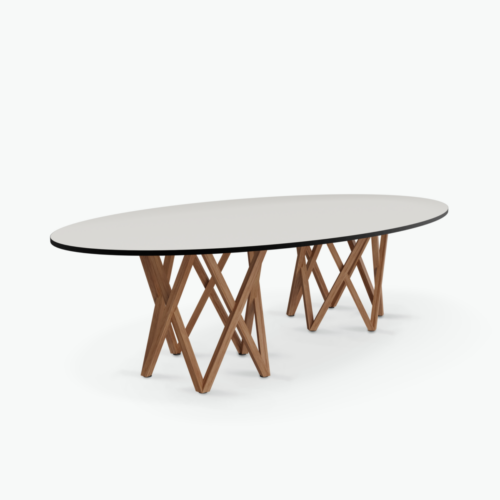


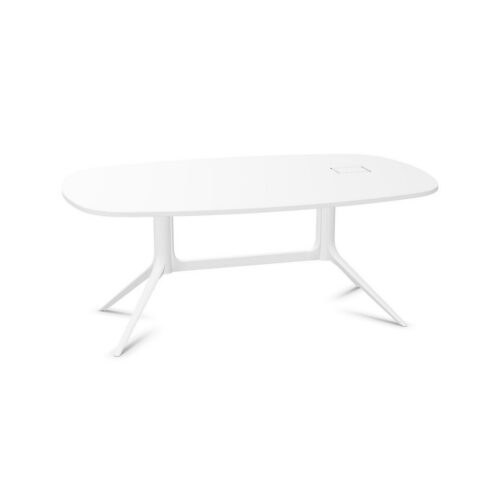
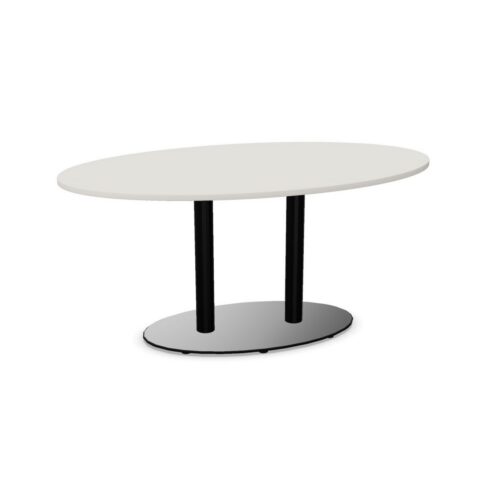


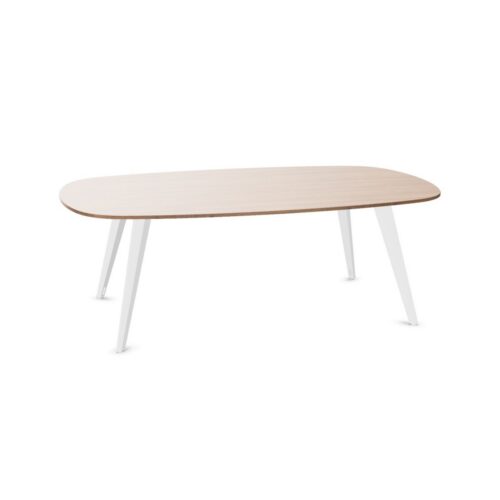
Position conference tables with elliptical tops and HPL tops
Choose the table's orientation after identifying the room's main point of attention. If a wall display leads most sessions, compare seating positions around the elliptical perimeter with that display in view. If conversation takes priority, focus on how participants face one another. Neither arrangement should rely on an empty-room impression. Include occupied chairs in the plan and consider where meeting notes will rest. The HPL surface is the chosen working material, but it does not determine which direction the table should face. Let the meeting format establish orientation, then assess how the material fits the room visually.
Give discussion and screen viewing separate checks
A comfortable conversation arrangement does not automatically provide a useful presentation arrangement. Review both activities independently, especially at the curved ends where chairs may face away from a display. Consider whether participants can turn toward the screen without shifting into a neighboring work area. For sessions that move repeatedly between shared discussion and presentation, avoid assigning an end seat solely because the layout looks symmetrical. Elliptical HPL conference tables work best within a considered room plan when every seat has a clear purpose. The relevant comparison is how each position supports the actual sequence of a meeting.
Assess HPL as part of the interior scheme
Use the material designation to keep your comparison focused, while leaving appearance open until you can assess the actual surface. HPL alone does not specify a color, pattern or edge treatment. Review the tabletop alongside the chairs and any fixed furniture that will remain. In a room containing several surface finishes, decide which elements should coordinate and which should provide contrast. The elliptical outline can serve as the organizing shape even when other furniture has straight edges. Keep the visual scheme understandable by giving the meeting surface a clear relationship with its surroundings, rather than relying on the material name.
