


Oval HPL Tables for Discussion Spaces

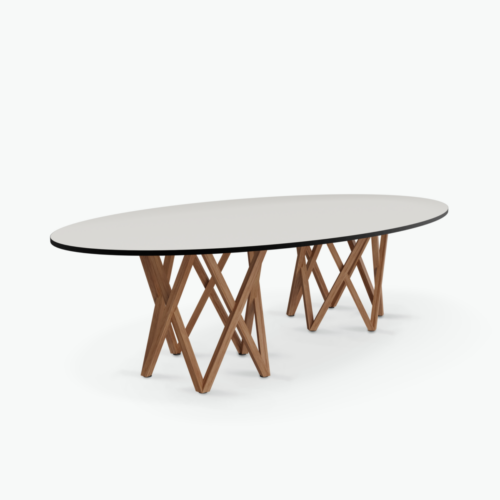
Conference tables with oval tops and HPL tops bring together an oval perimeter and an HPL working surface. Their relevance depends on how the room shifts between discussion, presentation and shared document work. Begin with that sequence rather than placing the table solely to align with the walls. The curved outline affects chair positions, while the material choice gives you a specific surface category to consider alongside the room’s other furniture.

Oval HPL conference tables need a layout that works throughout a meeting, including the moments when people turn toward a screen or step away from their seats. Check the relationship between side seating, end seating and the presentation area. Then review the actual tabletop appearance with the surrounding interior. The selected material does not establish additional features, so keep decisions about room use tied to the oval surface and the practical arrangement around it.

8 models
From €30.61 p/m
9 models
From €22.04 p/m
3 models
From €2.77 p/m
28 models
From €18.24 p/m
15 models
From €16.44 p/m
10 models
From €29.42 p/m
€36.33 p/m
10 models
From €39.97 p/m
6 models
From €24.72 p/m
7 models
From €15.42 p/m
3 models
From €15.42 p/m
5 models
From €57.99 p/m
€65.01 p/m
24 models
From €23.43 p/m
7 models
From €18.90 p/m
9 models
From €81.69 p/m
4 models
From €36.10 p/m
4 models
From €25.60 p/m
4 models
From €69.79 p/m
10 models
From €48.26 p/m
31 models
From €25.60 p/m

Orient conference tables with oval tops and HPL tops

Identify the room activity that sets the strongest requirement for table orientation. A presentation-led session may depend on clear views toward a display, while a discussion-led meeting places more emphasis on participants facing one another. Mark the intended chair positions around the oval and review both conditions before deciding where the table belongs. Include the curved ends in this exercise, since their seating angles can differ from those along the sides. Treat HPL as the selected tabletop material within that layout. Its designation does not settle the orientation, appearance or additional arrangements needed for the meeting to function.

Plan the transition from conversation to presentation

Consider a meeting that opens with a spoken update, moves to a screen and finishes with shared notes. At each stage, participants change their point of attention. Check whether chairs can turn toward the presentation without occupying a neighbor's working area or blocking the way behind them. Avoid assigning an end position without reviewing its view of the screen. Oval HPL conference tables can be planned around this sequence by treating the seating arrangement as part of the meeting process. Keep reference papers close to their users so they do not need to move across the surface whenever attention shifts.

Compare HPL surfaces within the room scheme

Look at the actual tabletop appearance beside the room's fixed elements, including storage and wall finishes. HPL identifies the material without specifying a particular pattern, color or construction. That distinction matters when comparing how different furniture pieces will relate visually. Decide whether the oval meeting surface should coordinate closely with the rest of the room or provide a separate focal element. Review the surface from seated positions as well as from the doorway. This connects the material decision to the experience of using the table, rather than judging the furniture only as an unoccupied composition.

Reserve access for people who leave mid-session

Meetings do not always begin and end with everyone moving together. Someone may leave to retrieve a document or return while the discussion continues. Plan routes from seats around the oval to the entrance and supporting furniture, keeping those paths usable behind occupied chairs. Pay attention to an end positioned near a door, where chair movement and passing traffic may overlap. Do not use that area for unattended bags or spare paperwork. Test the route from the participant's perspective so that stepping away from the table does not require an interruption or a temporary rearrangement of nearby seating.

Questions about oval HPL meeting spaces

Which direction should an oval table face?

Base the direction on the room's main activities and the location of any presentation area. Check views from every intended chair position. Wall alignment can inform the arrangement, but the practical relationship between participants and shared information should guide the final orientation.

Does HPL establish the tabletop's appearance?

The material name does not specify a particular visual finish. Assess the actual surface alongside existing furniture and room finishes. When comparing oval HPL conference tables, keep that visual assessment separate from assumptions about features or construction that the material description does not establish.

How can shared notes stay accessible?

Give active documents a recognized place on the tabletop and move them between participants when needed. Keep individual notes beside their owners. Check access from both the sides and curved ends instead of assuming that a central document is equally convenient from every position.

Assess conference tables with oval tops and hpl tops alongside circulation and the meeting's main viewing direction.

For conference tables with oval tops and hpl tops, map the intended seats before deciding how the table will sit within the room.

Explore related selections