





Organize Discussion Around the Circular Top
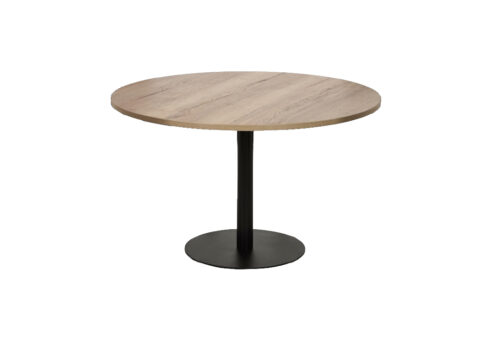
A round tabletop gives you a continuous edge around which to consider seating. Use that outline to examine face-to-face relationships, including how participants address colleagues beside them and across the table. The absence of a distinct end does not establish the meeting format; the room arrangement and the way the session is led still matter.
Think about the person facilitating the discussion as well as those contributing from their seats. Decide where notes or shared documents will be placed and how people will refer to them. Keep these activities connected to the proposed seating rather than assuming the circular shape resolves every interaction.
Plan Conference Tables With Round Leaf Tops
Position the circular outline in relation to the room's entrance and fixed elements. Corners of the room, storage and presentation areas still affect circulation even though the tabletop has no corners. Review the route around the actual chair arrangement, including the places where people are likely to pause before sitting.
Conference tables with round leaf tops should be considered with their supporting structure. A round surface does not establish a central base or unrestricted space beneath the edge. Check supports against intended chair positions and assess how people approach and leave their seats during the ordinary course of a meeting.
