


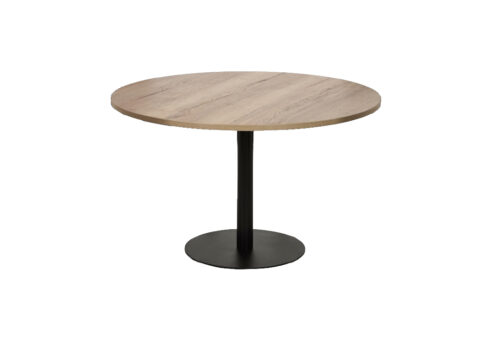
Arrange conference tables with round leaf tops and oak surfaces
Use the circular outline to plan seating around a shared center, then relate that arrangement to the room itself. A round tabletop does not remove the influence of the doorway, windows or presentation wall. Start with the main meeting activity and identify the positions people will use most naturally. Check how someone reaches a chair while others remain seated. Include the movement toward any writing wall or storage area. This approach helps distinguish an attractive centered arrangement from one that also supports ordinary meeting routines. The table's outline provides the organizing reference, while room access determines how that reference works in practice.
Coordinate oak tones without assuming a match
An oak-colored tabletop may relate to several existing finishes, but color names alone are not enough to establish a match. Compare the actual tone with the floor, doors and storage that will remain in the room. Decide if you want a close visual relationship or a clear difference. Chair upholstery and wall colors can help connect those choices within the broader palette. View the combination under the room's usual lighting and from the entrance as well as beside the table. Keep this assessment about appearance: the selected oak surface color does not confirm species, grain, construction or any material performance.
Review screen views around the circle
Oak-toned round leaf conference tables can be considered for rooms that combine discussion with presentations, but chair positions need careful review. A circular seating arrangement creates different angles toward a wall-mounted screen. Assess those angles instead of assuming every position serves every activity equally. Where presentations are frequent, let the shared viewing direction influence the layout. Where screen use is occasional, determine how participants will turn toward it during those moments. Keep the route to presentation controls clear and avoid placing supporting furniture where it interrupts movement between the table and the room's main shared information area.
