


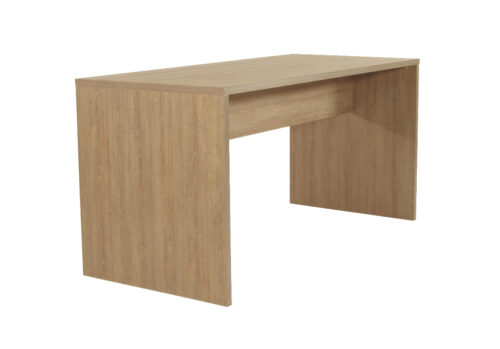
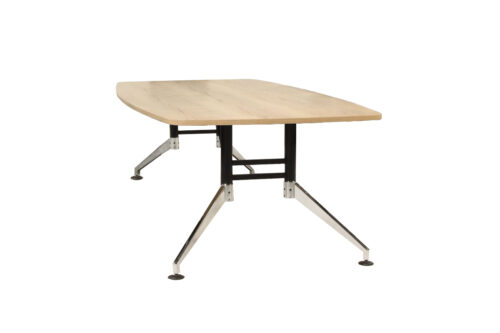
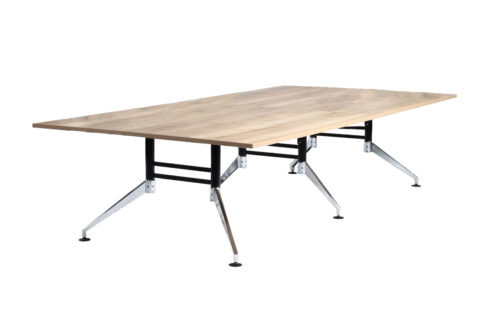
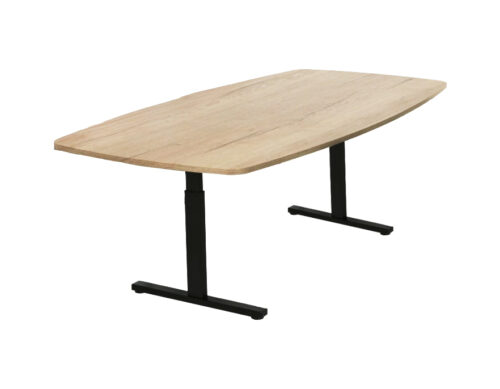
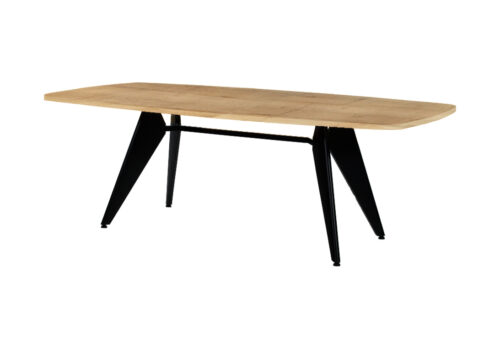
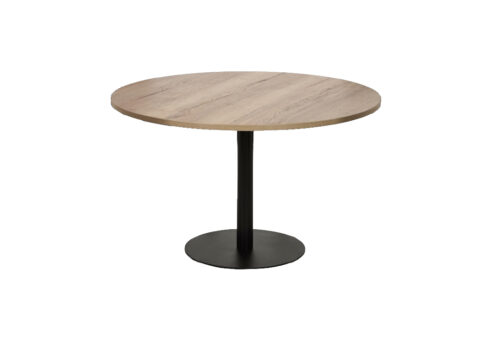
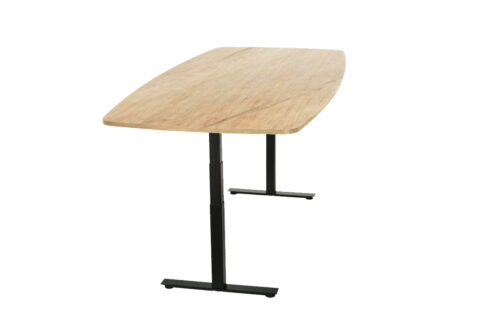
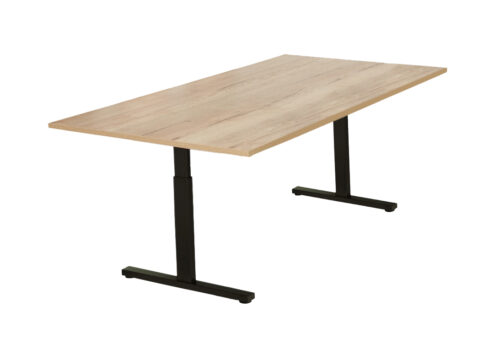
Coordinating Conference Tables With Oak Surfaces
Identify which existing finishes are fixed and which can change. Flooring, doors and storage may already introduce wood-related colors, so compare the proposed oak tone with those elements first. Do not assume that finishes described as oak will appear identical. Decide whether their relationship should be close or deliberately different, and review them together under the room's lighting. Conference tables with oak surfaces can provide a visual connection to existing furnishings without requiring every element to match. The useful comparison concerns actual color relationships, rather than names that may describe different appearances across different objects in the same room.
Balance Warmth With the Room's Other Colors
Consider the oak tone alongside the colors of walls, chairs and frequently visible equipment. Its warm visual character may be part of the intended room palette, but the overall effect depends on those surroundings. Introduce other colors with a clear purpose, such as distinguishing seating from the central surface or connecting the meeting area to adjacent workspaces. Avoid making every furnishing carry the same visual role. For conference tables with oak surfaces, a considered palette allows the table to belong in the room while keeping the arrangement readable. Review the composition from seated positions as well as from the entrance.
