










Establish a Clear Visual Hierarchy
A meeting room contains several potential points of attention: people, a display, writing on a wall, and the furniture itself. Decide where the purple base belongs within that hierarchy. It can contribute to the room's identity while the presentation area remains visually clear. Review adjacent chair colors and the floor because these frame the base directly. Repeating purple elsewhere is a choice, rather than a requirement. Consider whether repetition helps connect the setting or introduces competing accents. The actual tone and lighting matter more than assumptions about the color's mood.
Structure Sessions Around the Round Top
A circular tabletop leaves the meeting without an obvious front, which makes the room arrangement especially relevant. For facilitated discussion, choose a seat that gives the facilitator a useful relationship with the group and any supporting display. For a shared review, consider where documents will sit and how participants will address one another. The shape does not establish how people take turns or where responsibility sits. Plan those aspects through the session format. Keep the tabletop's continuous perimeter useful by arranging personal working places and shared material according to the activity.
Conference Tables With Round Tops and Purple Bases
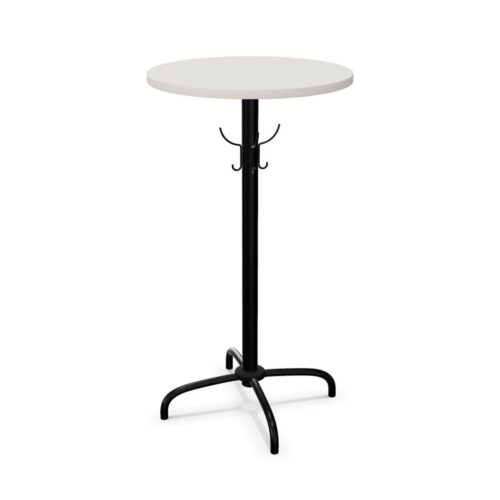
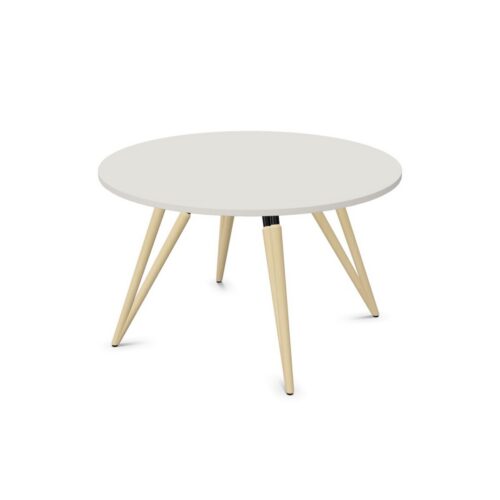
Bring the visual and practical decisions together when assessing conference tables with round tops and purple bases. An attractive view from the door should also lead into a clear arrival route. Chairs should relate coherently to the base without obstructing access to the table. A central position may suit a discussion room, but it needs to be checked against the door and presentation wall. Consider the setting under normal use, with personal items and occupied chairs included. This makes the comparison about the workplace experience rather than an isolated color pairing.
