

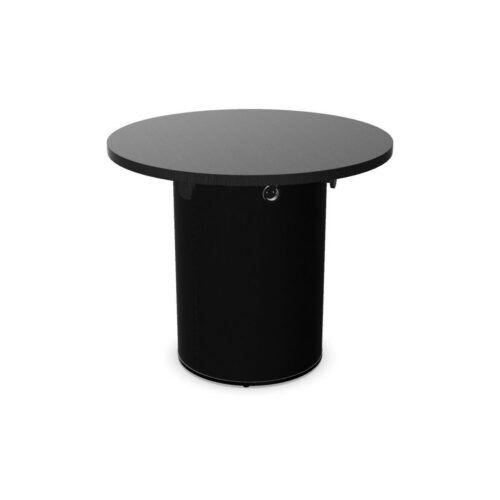
Round Tops for Face-to-Face Meetings

Conference tables with round tops organize the meeting around a circular perimeter, without designated ends. That makes the seating arrangement an important part of deciding where attention will go. Conversation may move around the table, while a presentation introduces an external focus that each participant must be able to see.

Plan the circle in relation to the room rather than assuming that a central position will work automatically. The entrance, presentation wall and surrounding furniture all affect where chairs should go and which approaches need to stay open. Think about how participants will share papers and whether a facilitator needs a particular position. A round top establishes the outline, but it does not establish equal access to every object placed at the center. Review the actual working arrangement, including occupied chairs and everyday meeting materials, before deciding how the table should sit within the space.

2 models
From €18.78 p/m
10 models
From €16.65 p/m
9 models
From €22.04 p/m
18 models
From €27.49 p/m
6 models
From €28.06 p/m
3 models
From €125.11 p/m
€9.29 p/m
€9.94 p/m
2 models
From €9.51 p/m
2 models
From €10.48 p/m
4 models
From €7.81 p/m
2 models
From €8.94 p/m
4 models
From €9.16 p/m
€12.30 p/m
€12.63 p/m
€13.02 p/m
€12.46 p/m

Conference Tables With Round Tops for Discussion

A circular outline has no head position built into its shape. Use that characteristic when planning discussion, while recognizing that seating choices can still establish a focal point. A facilitator beside a presentation wall may attract attention differently from someone seated opposite the entrance. Think about how participants will address each other and where shared reference material will be placed. Arrange chairs to support the conversation rather than treating an evenly spaced pattern as the only option. Check that people can turn toward a speaker without continually shifting their papers or leaning across a neighboring working area.

Account for a Screen Outside the Circle

A round tabletop and a presentation wall create different directions of attention. People face toward the table for conversation, then toward the wall for visual information. Review those changes from every intended seat. Some positions may require a greater turn than others, so decide whether they suit the room's usual agenda. If presentations dominate, consider the seating arrangement before choosing the table's location. If screen use is occasional, make sure the transition remains practical. Keep the approach to presentation equipment clear so that operating it does not require someone to pass through another participant's immediate working space.

Make Shared Materials Accessible

Conference tables with round tops encourage consideration of the center as a shared area, but central placement alone does not make an object convenient for everyone. Plan how reference papers will be circulated and where personal notes will sit. During a document review, avoid placing frequently used items where participants must stretch across the table. Bring the materials into the planning exercise rather than assessing empty furniture alone. The relationship between the curved edge and each chair matters as well. Confirm that individual working positions remain clear when the group turns from conversation to reading or writing.

Preserve a Clear Approach Around the Perimeter

The circular edge does not create tabletop corners, yet the occupied chairs still form boundaries within the room. Identify an obvious approach from the doorway and keep it usable during meetings. Consider how a late arrival reaches a chair without asking several people to move. Nearby storage and doors also need attention, particularly where their use overlaps with the route behind participants. A central location may suit the room, but an offset position can be worth considering when access demands it. Choose through the complete room arrangement, including work bags and other items that appear during everyday use.

FAQ About Round Conference Tables

Does a round top make all seating positions equivalent?

No. The outline has no ends, but doors, screens and room furniture still distinguish positions. Conference tables with round tops need a considered chair arrangement so that each intended seat supports the meeting's activities and has a practical route for arrival and departure.

Where should a facilitator sit?

Choose a position based on the agenda, presentation needs and interaction with participants. A round top does not prescribe that location. Check that the facilitator can use shared material and direct attention without repeatedly interrupting another person's work or access.

Is the center always the best place for documents?

Use it only when the intended participants can work with the material conveniently. Frequently handled papers may be better circulated or moved toward the person discussing them. Keep personal working areas clear and consider access during the actual meeting activity.

Explore related selections