



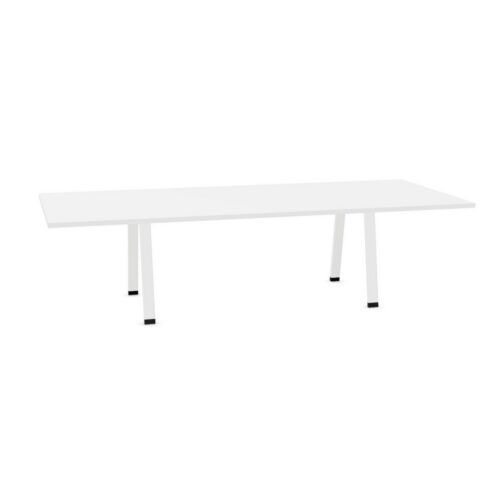


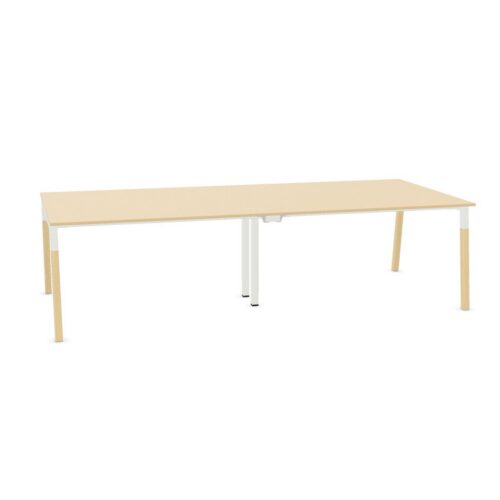
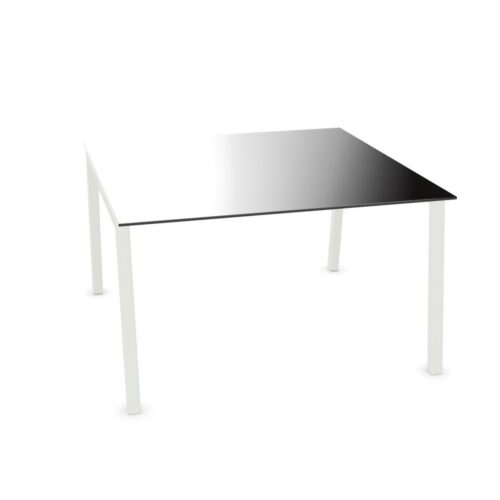
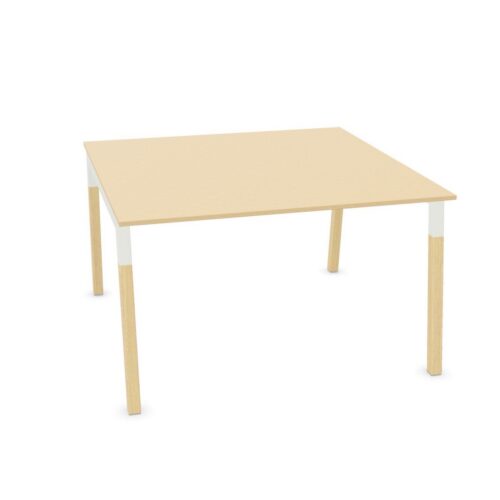

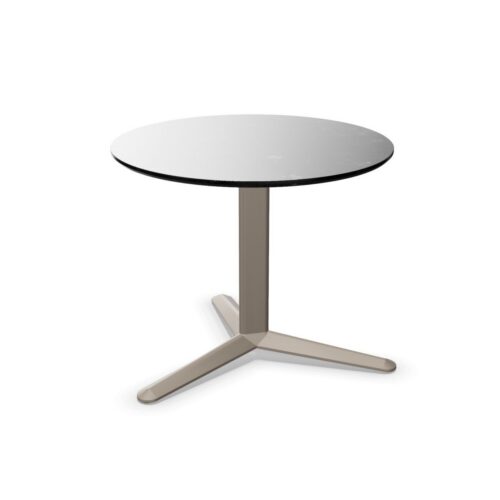

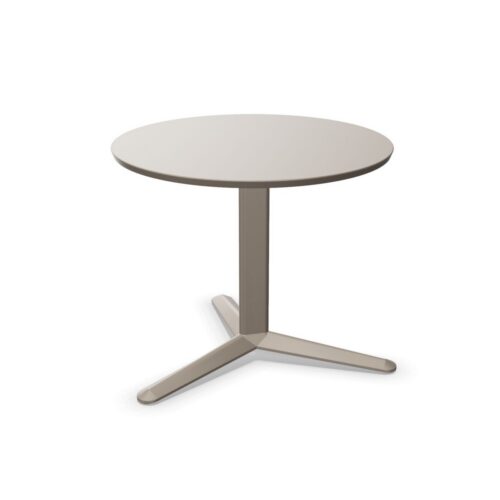
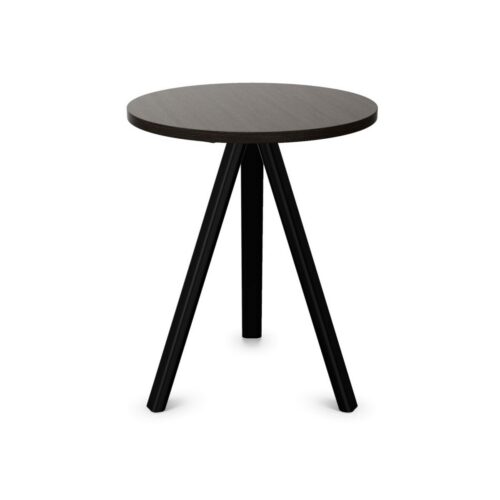

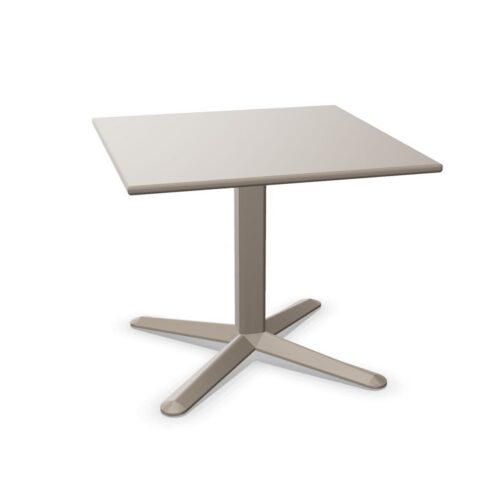
Use Conference Tables With Round Tops and Blue Bases
Choose the meeting area's main visual relationship before repeating blue elsewhere. The base can be a standalone accent or connect with a color already present in chairs, artwork, or another room detail. Consider how much of it is visible once the seating is in place. A color beneath the top contributes differently from a wall color or upholstery seen at eye level. Review the complete arrangement from the doorway and from seated positions. This establishes whether the blue feels integrated into the room without requiring every visible element to carry the same accent.
Give Team Discussion a Practical Orientation
A round top has no designated end, but a meeting still develops a direction through the placement of participants and shared information. Decide whether the group mainly faces one another or looks regularly toward a wall. For project reviews, consider where a facilitator can sit while retaining access to shared notes or a display. Place the remaining chairs according to those relationships. Check the actual supports beneath the top before confirming positions. The blue color helps describe the appearance of the base, but it offers no information about its configuration or the space around it.
