



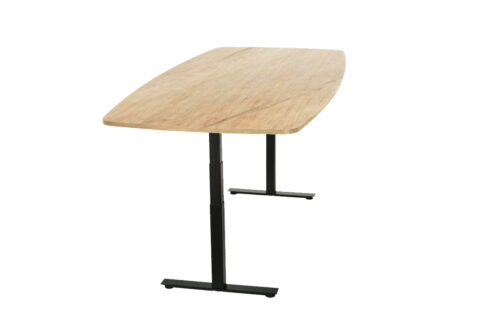
Planning manually adjustable semi-oval leaf conference tables
The difference to evaluate is the role of manual height adjustment in your room routine. A fixed working level asks you to settle the chair relationship once, while manual adjustment introduces a preparation task whenever that level changes. Identify the activity that requires the change and when it will happen. Avoid assuming that adjustment is suitable during an occupied meeting. Confirm the instructions before deciding how organizers will use it. The semi-oval leaf shape remains relevant at each intended position, so assess chair approach and the orientation of the curved outline alongside the practical steps involved in setting the table.
Use the Curved Outline to Guide Seating
Study where chairs naturally approach the actual tabletop and where participants will place their meeting materials. Around a curved edge, chair orientation can affect how people face one another and turn toward a shared display. Test those relationships with the intended chairs rather than relying on appearance alone. Consider whether the room's main activity is conversation, a presentation or a mixture of both. Manually adjustable semi-oval leaf tables should be positioned so their shape supports that routine. The outline can guide your seating plan, but it does not establish the base arrangement or guarantee unobstructed leg placement beneath every intended seat.
