

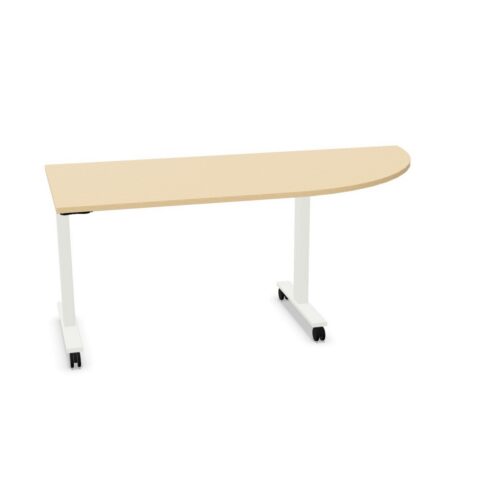
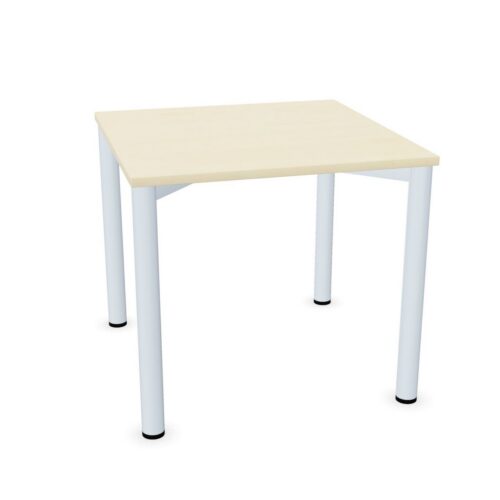
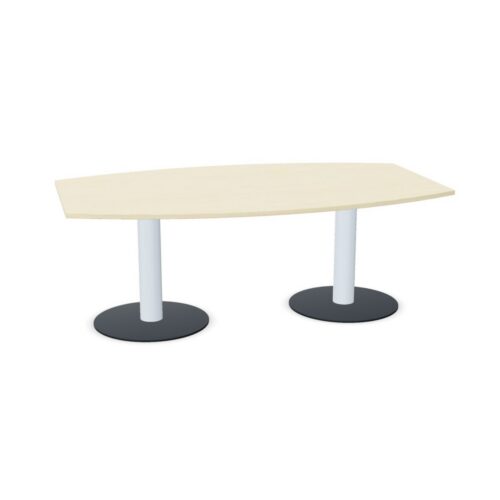
Semi-Oval Leaf Tables With Fixed Height

Fixed-height conference tables with semi-oval leaf tops pair a curved tabletop form with an unchanged working level. The combination calls for careful coordination between the outline, chairs and room orientation. Consider where participants will sit along the perimeter, how they will face shared information and which route they will use to reach their seats. Because the surface cannot be raised or lowered, the seated relationship needs to work as part of the initial arrangement.

Fixed-height semi-oval leaf conference tables can be assessed through the room’s normal meeting pattern. A discussion centered on shared papers may suggest a different orientation from a session focused on a presentation wall. Review the actual top rather than assuming that the shape determines a single placement. The leaf designation does not establish an extension feature, so plan the room around the stated tabletop form and its fixed working level.

6 models
From €10.56 p/m
7 models
From €10.56 p/m
18 models
From €42.84 p/m
6 models
From €48.77 p/m
3 models
From €10.00 p/m
5 models
From €12.69 p/m
3 models
From €5.08 p/m
3 models
From €12.73 p/m
2 models
From €28.29 p/m
5 models
From €57.99 p/m
24 models
From €23.43 p/m
7 models
From €18.90 p/m
2 models
From €18.14 p/m
4 models
From €25.07 p/m
7 models
From €23.14 p/m
4 models
From €36.10 p/m
5 models
From €24.25 p/m
2 models
From €6.89 p/m

Orient Fixed-Height Conference Tables With Semi-Oval Leaf Tops

Choose the table's direction by considering what people need to see. Identify the main presentation position and the areas used for face-to-face discussion, then assess how the semi-oval outline relates to those activities. A curved perimeter may lead chairs to face different directions, making a seated review useful before the layout is settled. Include the organizer's position as well as those of participants. The table's fixed height means this review should use the intended chairs at their practical working positions. An attractive orientation is only useful when people can approach the surface and follow the meeting from their assigned places.

Evaluate the Whole Seated Relationship

Check how chairs relate to the surface along the actual outline. Consider armrests, leg placement and whether people can draw their chairs toward the table without meeting an obstruction below. The tabletop shape does not identify the base configuration, so examine that relationship separately. Fixed-height semi-oval leaf tables make chair compatibility a central selection issue because the working level cannot change. If chairs adjust, review their useful positions for the people expected to use them, rather than relying on adjustment alone. The practical goal is a seated arrangement that suits both the surface and the person throughout a typical discussion.

Keep the Curved Perimeter Connected to Access

Plan movement around occupied chairs, not just around the tabletop. Look at where the curved edge approaches a doorway, storage area or presentation route. Check whether someone can leave a seat without asking others to move and whether a late arrival can reach an available place. Nearby freestanding furniture should be considered in the same walkthrough. A curved outline does not by itself establish a clear circulation path. Review the full arrangement in use, including chairs turned toward a screen. If the access route becomes awkward during a routine meeting activity, reconsider the table's orientation or the position of surrounding furniture.

Arrange Materials for the Meeting You Hold

Think through where papers, laptops and shared reference material will be placed. Check whether those positions leave each participant a practical working area and allow conversation across the table. For presentation-led sessions, assess whether materials obstruct the view or encourage people to turn away from the speaker. Fixed-height conference tables with semi-oval leaf tops should be selected through these everyday tasks, with the shape serving a clear room purpose. Establish a starting chair arrangement and return to it after sessions if the room is shared. This gives the next organizer a useful reference while allowing the seating plan to be reviewed as needs change.

Assess fixed-height conference tables with semi-oval leaf tops alongside circulation and the meeting's main viewing direction.

FAQ

Can the working level be adjusted?

No. This combination has no height adjustment. Check the chairs and seated working position before finalizing the layout, since the tabletop cannot be moved vertically to accommodate a different arrangement or activity.

Does the top need to face a wall?

The semi-oval leaf shape does not establish a required orientation. Decide its position by reviewing the actual outline, intended seating, presentation views and routes between the doorway and the meeting area.

What does leaf indicate here?

It is part of the tabletop shape description. For fixed-height semi-oval leaf conference tables, do not assume an extending or folding function. Plan around the stated form and assess any additional function separately.

Explore related selections