



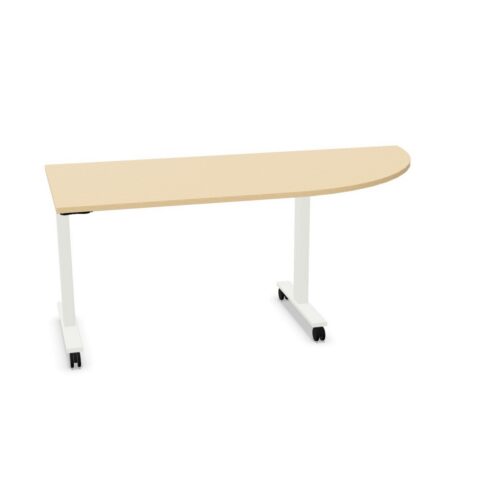

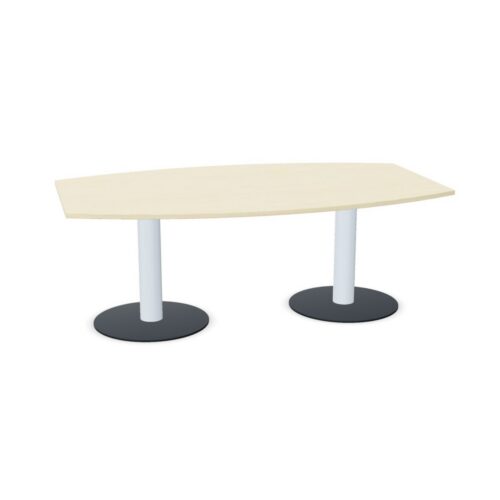


Using Semi-Oval Leaf Edges for Meeting Tasks
The different edge directions can help organize a meeting, but they do not assign roles automatically. Decide where participants will sit, where papers will be placed and whether a discussion leader needs a particular view. Then check how those activities relate to the curved and straight parts of the tabletop.
Avoid treating every available edge as an equivalent seating position. The angle between neighboring chairs affects conversation and working space. Walk around the proposed arrangement and consider how someone would join a meeting already in progress.
Comparing Conference Tables With Semi-Oval Leaf Tops and Melamine Tops
Keep shape and surface connected in the decision. The semi-oval leaf outline determines the working perimeter, while the melamine top contributes to the room's visible furniture scheme. Compare the actual surface with nearby desks or storage, particularly where the meeting area opens into a shared workplace.
Semi-oval leaf melamine conference tables should be assessed through their intended use rather than assumed material benefits. If surface appearance or care matters to the workplace, establish those requirements separately and check the relevant guidance for the actual table.
Positioning Shared Papers Without Blocking Views
For document-led meetings, decide where the shared material will sit before assigning chairs. Participants should be able to refer to it without repeatedly leaning across another person's notes. Follow the tabletop outline when organizing individual work areas and keep frequently discussed papers in a position that makes sense for the group.
When a display is also used, test the transition between looking down at documents and looking toward the screen. The semi-oval shape does not remove the need to check viewing directions from each intended position.
