






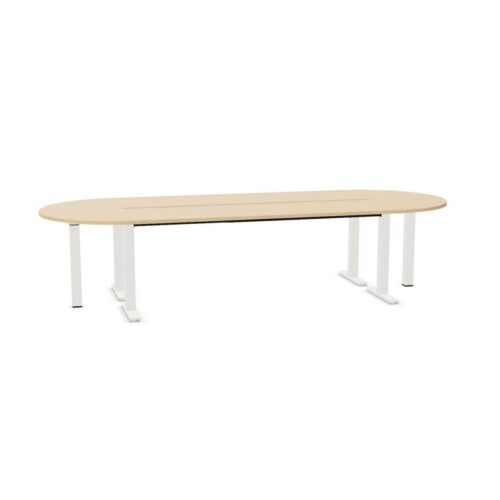



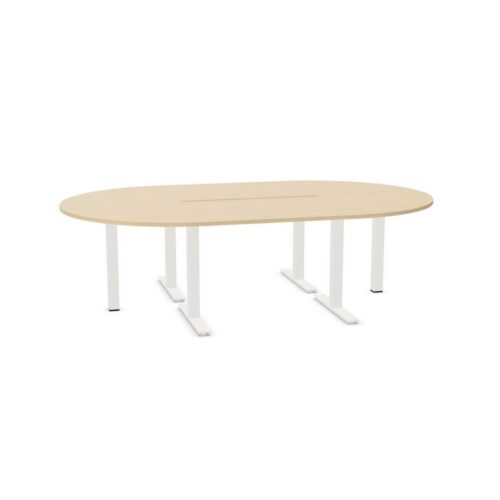
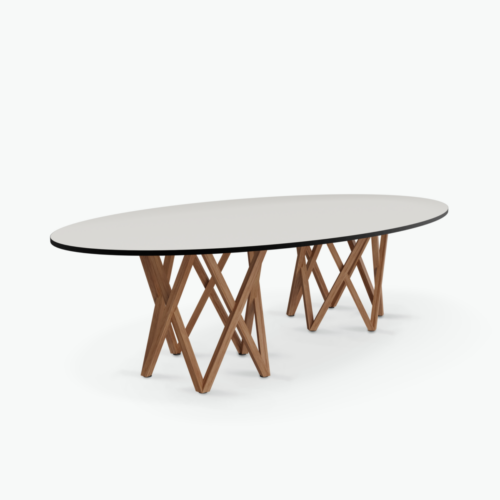


Use conference tables with oval tops and melamine tops deliberately
Decide what the oval outline needs to contribute to the meeting room. If discussion regularly moves between participants seated around the perimeter, arrange chairs to maintain that exchange. If the room is often used for reviewing papers, give the shared work area an equally clear role. The melamine tabletop establishes the selected material, but it does not determine how the surface should be divided during use. Sketch personal note areas and communal papers alongside the chairs. This makes it easier to see where the oval shape supports the meeting and where the arrangement needs adjustment before the room is occupied.
Assign a purpose to the curved ends
End positions deserve the same attention as seats along the sides. Consider whether someone seated at an end can participate naturally, place notes conveniently and leave without disturbing adjacent colleagues. An end beside the entrance may need to remain clear for movement instead. Avoid treating these areas as automatic locations for extra chairs or unattended materials. Oval melamine conference tables benefit from an arrangement in which each part of the perimeter has a deliberate use. The right decision comes from the meeting routine, especially whether participants stay seated throughout or frequently move between the table and other room areas.
Relate the melamine surface to surrounding furniture
Where melamine appears elsewhere in the workplace, compare the actual surfaces before pursuing a coordinated appearance. The same material description does not establish matching color or finish. Consider the table together with chair upholstery, storage fronts and the background visible from the entrance. The oval outline can provide visual continuity around the central surface even when surrounding furniture follows straight lines. Keep the palette focused enough that papers and presentation materials remain easy to distinguish from the room's furnishings. Assess the real combination under normal lighting rather than making assumptions from the material label alone.
