



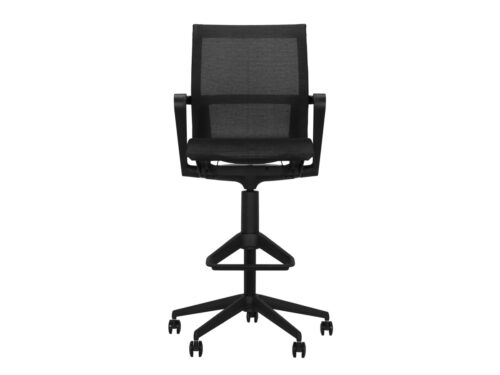
Map The Fixed Geometry First
For unstandardised office chairs with fixed armrests, establish the dimensions that connect the user to the desk. Measure armrest position relative to the seat and check the available space beneath the working surface. Assess those relationships at the seated position used for normal work, rather than an incidental trial setting.
Do not stop at a single height measurement. Desk edges, drawers and other structures may affect where the chair can sit. Observe the full approach to the workstation and the route used to leave it. This reveals contact points that an isolated comparison of dimensions can easily miss.
Match People To The Armrest Position
A fixed armrest position needs to be assessed across the intended users. Ask participants to work with their usual keyboard, documents or other equipment, and observe their shoulders and forearms. Note whether they use the support naturally or change posture to accommodate a position that does not suit them.
For shared desks, record differences rather than averaging them into one score. One user may clear the desktop comfortably while another needs a different seat position. Those findings help identify where consistent allocation is practical and where a chair should be assessed for a more specific person or task.
