



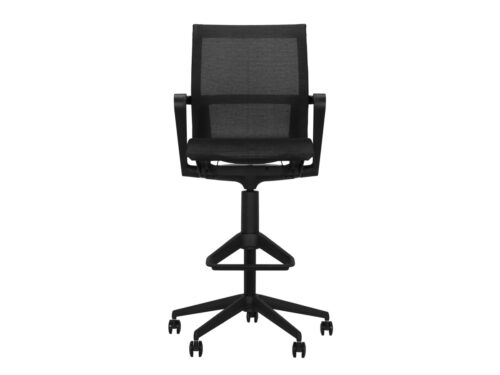
Define What the Room Requires
Begin with the seating position and its purpose. Describe the activity, the people expected to use it and the work surface involved. Separate practical needs, such as a suitable seated height, from documentary requirements that the organisation has set for the room or project.
If a particular seating standard is mandatory, establish the evidence needed before progressing the comparison. A chair without a stated standard should not be assigned an assumed performance level. Equally, the absence of a general statement should not replace a direct enquiry about any separately documented compliance for the exact configuration.
Judge Fixed and Adjustable Seating Deliberately
Both adjustable and fixed seat heights are represented. For adjustable seating, obtain the actual height range and ask intended users to operate the control. For a fixed configuration, compare the stated dimensions directly with the person and surface involved. Neither description alone establishes that the chair will suit the workstation.
Manual height adjustment and configurations without a mechanism are included. Armrest choices include fixed armrests and options without armrests. Assess approach distance, available leg space and the position of the user’s arms during representative work. These practical observations provide a clearer comparison than a general impression of the chair’s appearance.
