



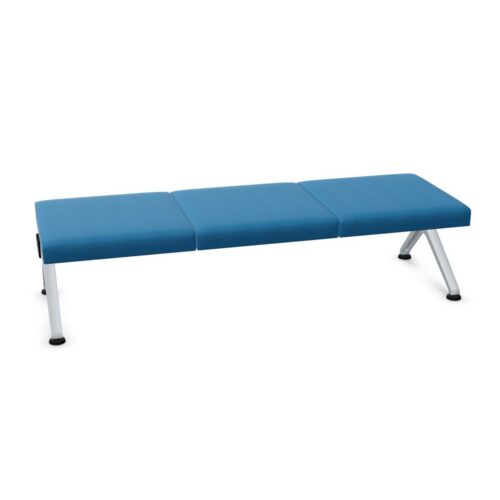


Arranging lounge furniture with no armrests and plastic upholstery
Map the main route through the room before deciding where the lounge area begins. Seating without armrests still occupies a defined place, and the space beside it should have a clear role. It may form part of the approach to a seat, a separation between users, or a boundary beside a circulation route.
Use the absence of arms as a planning consideration rather than a reason to fill every gap. A row positioned close to a doorway can remain awkward even when the seating sides are open. Review the full furniture outline and the likely movement of visitors entering and leaving the area.
Make Neighboring Seats Read Clearly
Without armrests, the relationship between adjacent seating positions becomes particularly important. Decide whether the arrangement should communicate individual places or a more continuous group. Assess the actual seat form and the spacing between pieces, keeping the expected social setting in mind.
For lounge furniture with no armrests and plastic upholstery, this is also an opportunity to coordinate surface appearance with the rhythm of the layout. Repeated outlines can establish visual order, while changes in orientation can distinguish waiting from conversation. Neither approach requires assumptions about the furniture being connectable, movable, or part of a modular system. Confirm any such characteristic separately if it matters to the plan.
