









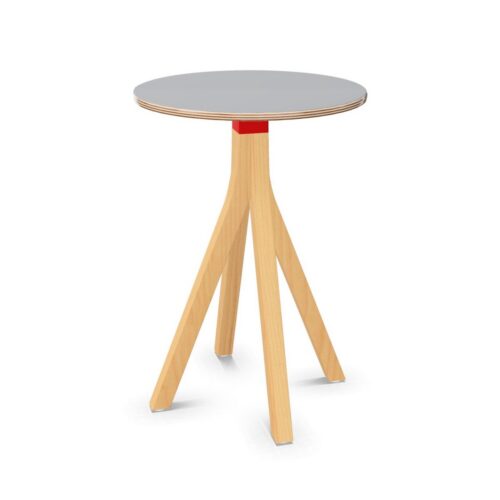


Positioning lounge furniture with round tops and red surfaces
Locate the table in relation to the seating before deciding whether it belongs at the geometric center of the available floor area. A room's center and a group's shared center are not necessarily the same place. Place the circular outline on the plan and review its relationship with every seat. Consider whether a sofa carries more of the group's visual weight than individual chairs, and whether that affects the intended position. Then assess the arrangement from outside the group. A round top should have a clear place in the composition without depending on a long axis for orientation.
Test access around the circle
When comparing lounge furniture with round tops and red surfaces, trace movement around the entire perimeter. Circular geometry removes tabletop corners, but the surrounding furniture still determines the available routes. Check the approach between seats, the path around a sofa end, and movement past the group. Include people seated in the arrangement when reviewing these relationships. Avoid assuming that equal spacing on a drawing creates equivalent access in practice. The direction from which people enter and the position of nearby furniture can make one part of the circle more significant than another for everyday movement.
