

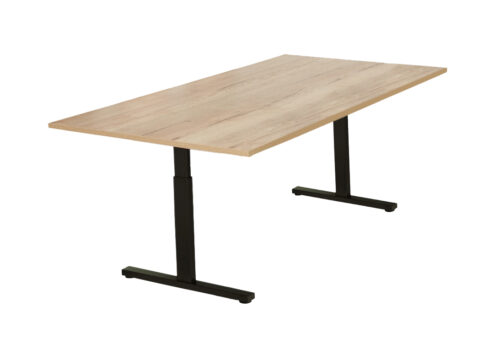
Manual Height Adjustment With Black Bases

Keep the height-setting routine consistent with the room’s booking pattern so the next group knows how the furniture has been prepared. Manual adjustment allows the working level to change through user operation, making the adjustment routine part of room planning. The black base also needs to be considered beside the intended seating and floor. These aspects belong together when deciding how the meeting area will look and how it will be prepared for use.

Think first about when the working level would change and who would make that change. A shared room needs an understandable routine that follows the table’s operating instructions. Do not assume a particular adjustment mechanism from the description alone. Review access for the person making the adjustment, the position of chairs, and any equipment connected to the tabletop. Then consider whether the black base should contrast with its surroundings or coordinate closely with nearby chair frames.

3 models
From €10.66 p/m
7 models
From €10.56 p/m
€11.05 p/m
9 models
From €6.19 p/m
2 models
From €5.94 p/m
€27.04 p/m
€6.13 p/m

Build the Adjustment Routine Around Meetings

Manual adjustment places the change of working level within the room's setup routine. Consider whether adjustments would happen before participants arrive, between different activities, or when the room is reset. That decision helps establish who needs access to the table and when surrounding chairs or belongings should be moved.

Manually adjustable conference tables with black bases should be assessed against the frequency and purpose of those changes. Avoid assuming how the mechanism operates or how the adjustment will feel. Use the actual operating guidance to decide whether the process suits the people responsible for preparing and using the room.

Planning manually adjustable conference tables with black bases

A fixed working level supports a consistent setup, while manual adjustment introduces an additional task when the height changes. The useful comparison is between those routines and the activities expected in the room. Establish a clear reason for adjustment rather than treating it as a substitute for planning the meeting arrangement.

Consider how the chairs will be used at the intended working positions. Height adjustment does not, by itself, establish the suitability of any particular chair. Assess the relationship between the seating, tabletop, and supports, keeping the actual meeting tasks at the center of the decision.

Keep the Adjustment Area Accessible

The person operating the table needs access appropriate to its actual mechanism. Do not place nearby furniture where it would obstruct that operation. Review the surrounding area before a change, following the table's instructions and considering anything that could interfere with its movement.

For manual conference tables with black bases, equipment leads need attention whenever the working level changes. Check that connected equipment can accommodate the intended movement without leads being pulled tight or caught. Plan their routes independently, since manual height adjustment does not establish the presence of cable trays or other cable management features.

Use Black to Define the Lower Composition

Compare the base with chair frames and flooring under the room's usual lighting. Black may form a clear outline against a lighter background or appear more closely related to darker finishes. Choose the relationship that suits the room without assuming that the base color determines the tabletop appearance.

Review the visual result with the chairs in their normal meeting positions and after the room has been reset. The visible supporting structure may change between those arrangements. Keep its physical location in mind as well: a closely coordinated color scheme still needs straightforward access to seats and clear routes around the occupied table.

Changes to the tabletop level need to work with chair positions, presentation views and the space people use when approaching or leaving the table.

FAQ About Manual Adjustment and Black Bases

What should I confirm about height adjustment?

The working height is adjusted manually. Review the actual procedure in the table’s instructions, then assess the intended positions with the chairs and equipment used in the room.

Does manual adjustment mean a particular mechanism?

No specific mechanism is established here. Do not assume a handle, crank, or other operating method. Check the actual operating instructions and consider the access needed by the person making the adjustment, together with the way the room will be prepared for meetings.

What should happen before changing the working level?

Follow the table's instructions and review the surrounding chairs, belongings, and connected equipment. The aim is to accommodate the intended movement with clear access for the operator. Make that review part of the shared room routine whenever an adjustment is planned.

Explore related selections