



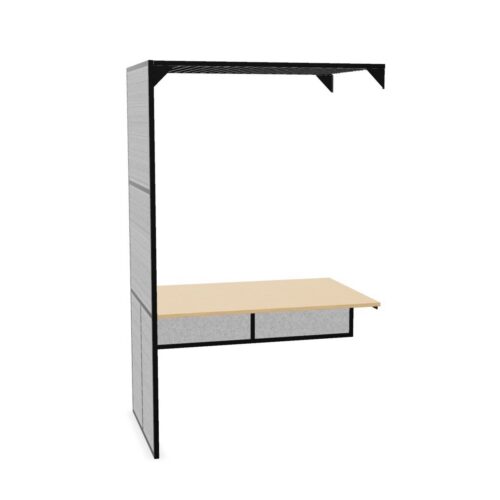


End Seating at Conference Tables With Panel Leg Frames
Begin by checking where the supporting panels sit relative to any intended end seats. Consider the approach to the chair, the position of a seated participant's feet and the movement needed to stand up. The panel-leg designation does not establish whether every end position will suit regular use.
If end seats have a specific role, assess that role directly. A meeting leader may need to turn toward a presentation or leave the table to use a writing area. A participant attending briefly may need a clear route to the door. Let these activities guide the seating arrangement.
Understanding the Base From Seated Viewpoints
Panels create a different visual form from narrow individual legs. Look beneath the tabletop from the entrance and from across the room to understand how the actual supports relate to chairs and surrounding furniture. Then review the view from seated positions, where the base may be experienced differently.
Keep this assessment grounded in the actual arrangement. Panel legs do not establish a particular color, material or degree of visual enclosure. Decide how the support form belongs in the interior without assuming privacy, acoustic effects or other characteristics that the frame designation does not confirm.
