


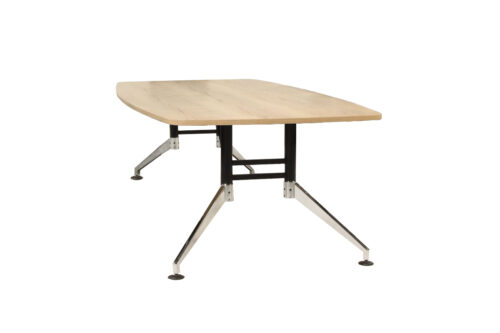
Positioning non-stackable conference tables with cognac walnut surfaces
Begin with the table's relationship to the room's existing focal points. These may include a presentation wall, a shared board or furniture already used for meeting materials. Decide whether the cognac walnut color should continue an established scheme or give the meeting area its own visual identity. Non-stackable conference tables with cognac walnut surfaces need individual accommodation, so include the table's between-meeting position in that decision. A surface that looks appropriate in the main arrangement should also be considered wherever the table may stand during another activity, particularly in a room used by several teams throughout the working day.
Compare neighboring colors before seeking a match
Place the cognac walnut appearance in context with the closest furniture first. Chairs and adjacent cabinets will influence how the surface color is perceived more directly than a finish elsewhere in the building. Similar color names do not establish an exact match, and the walnut wording does not establish material. Look at the actual finishes together and choose whether continuity or contrast better supports the room. If existing furniture already introduces several tones, decide which relationships matter most. This can keep the meeting arrangement visually coherent without requiring every visible surface to appear identical from every position in the room.
