


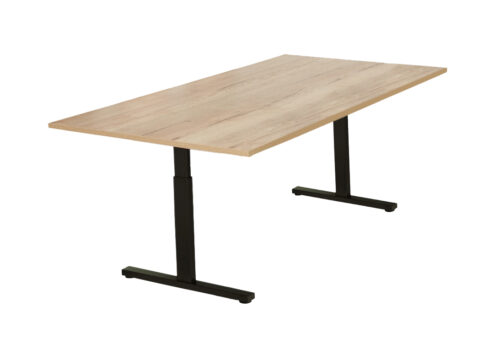
Placing non-stackable conference tables with dark gray oak surfaces
Think first about where the table will be seen most often. In a dedicated meeting room, it may remain the main visual element throughout the working day. In a shared space, it may also need a secondary position between activities. Non-stackable conference tables with dark gray oak surfaces need individual placement in either situation. Evaluate the color from the entrance and from the usual seating positions, including its relationship to nearby furniture. This approach connects the chosen surface appearance to the practical reality of a table that cannot disappear into a stack when the room's purpose changes.
Assess the color under working light
Dark gray oak can appear different as daylight and artificial lighting change. Review the intended appearance during the conditions in which meetings usually happen, paying attention to the contrast between the tabletop and the rest of the room. Bring typical meeting items into that assessment, such as papers and notebooks, to judge the overall visual balance. Do not infer a particular sheen or surface texture from the color description. The useful question is whether the actual appearance feels appropriate in the room, with the lighting people will use for discussion, reading and presentations during an ordinary working day.
