


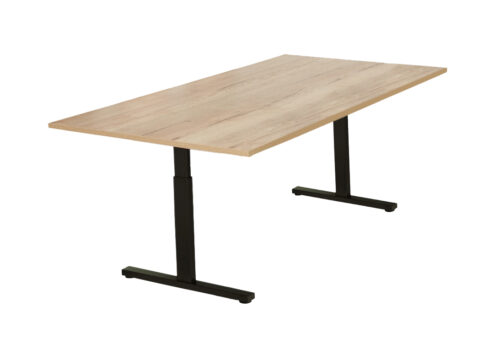
Assessing Conference Tables With Dark Gray Oak Surfaces
Begin with the finishes that will remain in the room. A dark floor, dark seating and a dark gray oak surface may create a closely related palette, but their boundaries still need to be visually understandable. Compare them together instead of judging the table color in isolation. Lighter surrounding elements can introduce separation where desired, while related tones can create continuity. Conference tables with dark gray oak surfaces should be assessed against the actual room palette rather than an assumed image of oak. The color name does not establish a particular grain, texture or underlying material for the surface.
Observe the Tone During Different Meeting Activities
A room used for conversation and screen presentations may have different lighting arrangements for each activity. Review the dark gray oak tone in those conditions and from the seats people will use. Consider whether the surface remains visually distinct from chairs and flooring when lighting changes. Do not infer glare behavior or a particular sheen from the color description. Those qualities need separate confirmation if they matter to the project. The useful question at this stage is how the chosen tone participates in the room under its normal working conditions, including daylight, artificial lighting and the setting used for presentations.
